The trajectory of a Hollywood superstar is usually measured in box office numbers, awards, and cultural impact. For Bruce Willis, that legacy is already secured through iconic films like Die Hard, Pulp Fiction, and The Sixth Sense. But today, the most powerful chapter of his life is unfolding far from Hollywood—inside his home, surrounded by a family that has redefined what loyalty, love, and unity truly mean.
Since his diagnosis with Frontotemporal Dementia (FTD), Willis has stepped away from acting and into a quieter, more intimate phase of life. This condition, which affects personality, behavior, and language, has changed the rhythm of his days—but not the essence of who he is. And perhaps more importantly, it has revealed something deeper: the strength of the people around him.
A Different Kind of Strength
FTD is not just a medical diagnosis—it’s a life-altering reality. For a man known for sharp dialogue and commanding presence, the shift has been profound. But instead of retreating into silence, his family—led by Emma Heming Willis and supported by Demi Moore—has chosen openness.
They’ve turned social media into something rare: not a highlight reel, but a real-life journal.
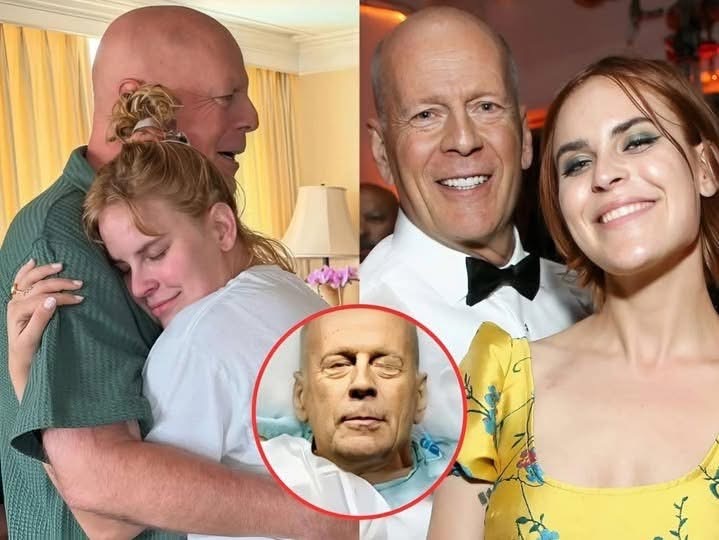
Photos shared by daughters like Scout Willis offer glimpses of everyday life—moments that might seem small but carry enormous weight. A quiet laugh. A shared meal. A simple touch. These are no longer background details; they are the story.
The Power of a “Bonus Family”
What makes this story even more powerful is the structure of the Willis family itself.
Long before modern trends made it popular, Bruce Willis and Demi Moore built a model of respectful separation and continued unity. After their divorce, they remained close—co-parenting their daughters Rumer Willis, Scout Willis, and Tallulah Willis.
When Emma Heming Willis became part of Bruce’s life, the family didn’t divide—it expanded. Together, they welcomed two more daughters, creating what many now call a “bonus family.”
Today, that unity is their greatest strength.
They don’t operate as separate households—they function as one support system, sharing the emotional and physical weight of caregiving.
Redefining Heroism
For decades, Bruce Willis was known as the ultimate action hero—the man who never backed down, who endured, who survived.
But today, his heroism looks different.
It’s quieter.
It’s found in vulnerability.
In allowing himself to be cared for.
In living fully, even when life changes in ways no one can control.
And equally, the heroism extends to his family:
- To Emma, balancing caregiving with honesty and advocacy
- To Demi, standing beside them as a partner in support
- To his daughters, who have turned pain into awareness and strength
They’ve shown that courage isn’t always loud. Sometimes, it’s consistency. Presence. Love that doesn’t fade under pressure.
Changing the Narrative Around Illness
Through their openness, the Willis family has done something important—they’ve humanized illness.
Instead of letting FTD define Bruce as “gone,” they’ve shown the world that he is still here:
- A father
- A husband
- A grandfather
- A man surrounded by love
Their message is clear: a diagnosis is not the end of identity.
By sharing their journey, they’ve also raised awareness for Frontotemporal Dementia—a condition many people knew little about before.
The Legacy That Truly Matters
Bruce Willis built a legacy in cinema. That’s undeniable.
But what’s becoming even more meaningful is the legacy he’s building now—through his family.
It’s a legacy of:
- Unity after separation
- Strength through vulnerability
- Love that adapts, not disappears
When fans look back years from now, they won’t just remember the explosions, the one-liners, or the action scenes.
They’ll remember this.
A man who, even in silence, is surrounded by voices that love him.
A family that chose connection over fear.
A story that proves the strongest thing a person can leave behind… is how they loved.
Final Thought
In a world obsessed with fame, success, and image, the story of Bruce Willis reminds us of something deeper:
When everything else fades—career, spotlight, control—
what remains is family, presence, and love.
And sometimes… that’s the greatest legacy of all.