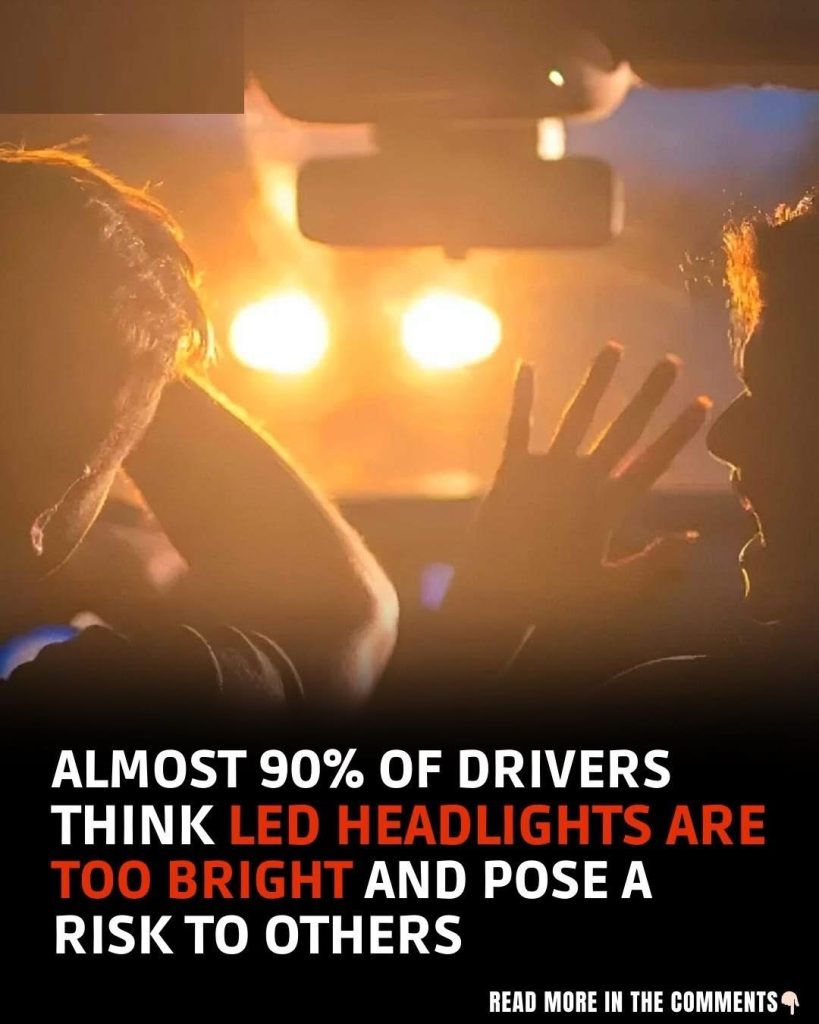
The light hits first—before the shape of the car, before the sound of the engine.
For a brief but terrifying moment, your vision collapses into white glare. Your pupils struggle to react, your heart rate spikes, and you’re moving at highway speed with limited visibility.
This experience is no longer rare. Drivers around the world describe the same scenario: a sudden burst of blinding light from oncoming traffic that leaves them squinting, braking instinctively, or drifting slightly in their lane. What was once an occasional nuisance has become a widespread concern tied directly to modern vehicle lighting.

Over the past decade, LED and HID headlights have rapidly replaced traditional halogen bulbs. These newer systems were introduced with good intentions—brighter illumination, improved energy efficiency, longer lifespan, and light that more closely resembles daylight. For drivers behind the wheel of vehicles equipped with them, the difference is obvious: roads appear clearer, signs pop out sooner, and visibility feels sharper.
But what improves visibility for one driver can severely compromise it for another.
Unlike halogen headlights, which emit a warmer and more diffused glow, LED and HID lights produce a sharply focused, high-intensity beam. When that beam is even slightly misaligned, or mounted higher on SUVs, pickup trucks, and crossovers, it often shines directly into the eyes of oncoming drivers. A misalignment of only a few degrees can dramatically increase glare, effectively blinding another driver for several critical seconds.
The problem is amplified by modern vehicle design trends. Cars are getting taller, heavier, and wider. Headlights now sit higher than ever before, frequently above the natural eye line of drivers in smaller vehicles. On uneven roads, hills, curves, or dips, the beam angle can change instantly, turning headlights into momentary flashbangs.
Even when a driver looks away or glances down at the road markings, the damage is already done. Intense light exposure reduces contrast sensitivity and depth perception, making it harder to judge distance, speed, or the position of other vehicles. The effects linger longer than most people realize.
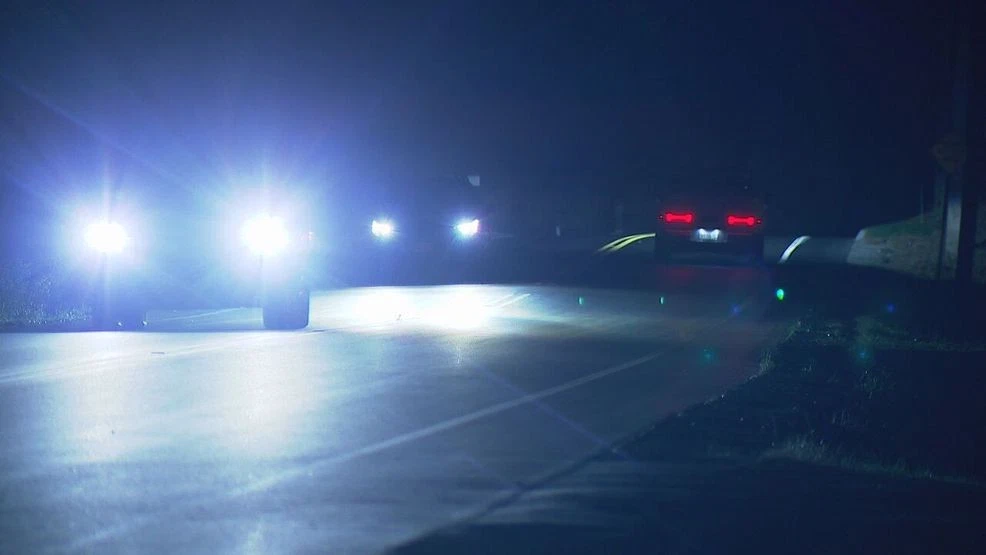
At night, the consequences can be severe. A vehicle traveling at 65 miles per hour covers roughly 95 feet every second. If glare impairs vision for just three to five seconds, that car travels hundreds of feet with limited or distorted visual input. That distance can be the difference between avoiding a hazard and colliding with it.
Traffic safety organizations have linked glare to a noticeable portion of nighttime accidents, though exact figures are difficult to capture. Temporary blindness is rarely listed as an official cause in crash reports, even when drivers later describe being unable to see clearly moments before impact.
Current headlight regulations have struggled to keep up with these changes. Many standards in use today were created decades ago, when halogen bulbs dominated the market and vehicles were lower to the ground. While rules exist for beam intensity, height, and alignment, they often fail to reflect real-world driving conditions that include mixed vehicle sizes, uneven terrain, and rapidly advancing lighting technology.
As a result, drivers are left exposed to inconsistent and sometimes excessive glare, with limited protection or enforcement.
Some newer vehicles offer adaptive lighting systems designed to address this issue. These systems can automatically adjust beam direction, brightness, and spread based on road curvature, vehicle speed, and the presence of oncoming traffic. More advanced matrix LED systems can selectively dim specific sections of the beam while maintaining strong forward visibility.
However, these technologies remain far from universal. They are often reserved for higher-end models, leaving millions of vehicles on the road equipped with powerful but static headlights that do not adapt to changing conditions.
The issue extends beyond technology into human behavior and psychology. Drivers exposed to repeated glare often respond instinctively—by looking away, braking suddenly, or tensing up behind the wheel. Even when accidents are avoided, these reactions disrupt traffic flow and increase overall stress levels.
Over time, frequent exposure to blinding headlights can create anxiety around nighttime driving. Some drivers begin avoiding travel after dark altogether, while others drive more cautiously, slowing traffic and increasing congestion during daylight hours instead.
Urban and rural environments present different but equally serious risks. In cities, wet pavement, reflective road signs, glass surfaces, and dense traffic can multiply glare through reflections and scattered light. In rural areas, higher speeds and minimal ambient lighting make glare even more dangerous, as drivers have fewer visual references to rely on when their vision is impaired.
Emergency responders have noted that glare-related disorientation often contributes to near-misses, delayed reaction times, and loss of lane control at night—especially on high-speed roads.
Health factors further complicate the problem. Intense light exposure can cause a phenomenon known as “flash blindness,” where the eyes temporarily lose their ability to perceive detail and contrast. Recovery time varies depending on age, eye health, and ambient lighting conditions. Older drivers and those with vision issues such as cataracts or refractive errors are particularly vulnerable, facing longer recovery times and greater risk.
Aftermarket modifications add another layer of concern. Many drivers install LED or HID conversion kits without proper calibration, increasing intensity beyond safe limits or misaligning the beam pattern. While these upgrades may appear harmless—or even beneficial—to the owner, they can significantly increase danger for other road users.
Experts emphasize that the problem is not overly sensitive drivers, nor is it the LED technology itself. The real issue lies in how these systems are implemented, regulated, and maintained. Solutions exist: stricter glare limits, mandatory alignment checks during inspections, better enforcement against non-compliant modifications, and broader adoption of adaptive lighting systems.
Until those measures become standard, drivers must manage the risk themselves. Simple steps—keeping headlights properly aligned, avoiding illegal modifications, cleaning lenses, and adjusting driving behavior at night—can reduce exposure, but they cannot eliminate the hazard entirely.
In the end, the glare from modern headlights represents more than a technical inconvenience. It is a safety issue rooted in the intersection of technology, regulation, human perception, and road design. As vehicles continue to evolve, balancing innovation with responsibility will be critical. Brighter roads should not come at the cost of blinding the people driving toward us.