Former U.S. President Donald Trump has claimed that the United States has generated approximately $600 billion in revenue from customs tariffs, describing them as a key pillar of America’s economic success.
Speaking in an interview with Fox News, Trump defended his aggressive trade policy, emphasizing that tariffs were not only effective but necessary.
“Tariffs are essential for success. We have generated $600 billion from tariffs,” Trump stated.
Trump also warned that if the U.S. Supreme Court ultimately rules against the legality of the tariff measures, his administration—or a future one aligned with his policies—would find alternative mechanisms to achieve the same economic objectives.
“If the Supreme Court finds the tariffs invalid, the administration will find a replacement,” he added.
Background of the Tariff Policy
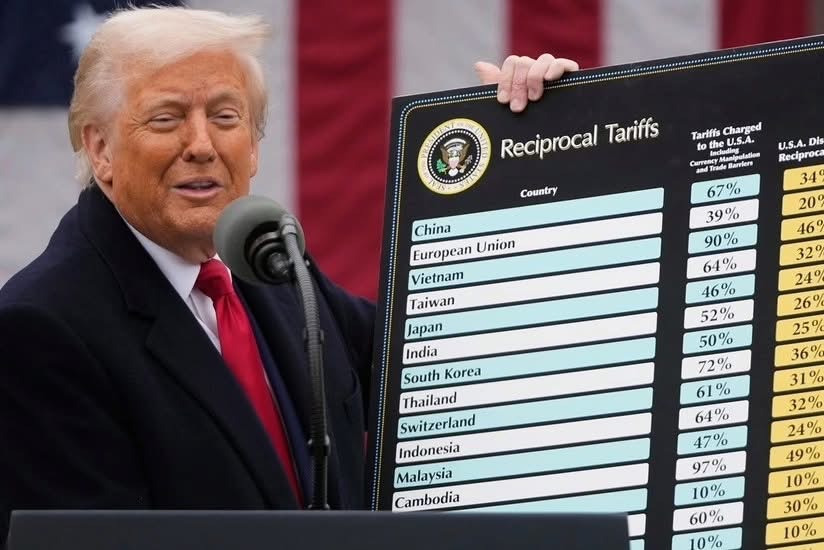
On April 2, 2025, Trump announced the introduction of sweeping tariffs on imported goods from 185 countries and territories, marking one of the most extensive trade actions in U.S. history. The move was framed as a strategy to protect American industry, reduce trade deficits, and pressure foreign governments into renegotiating trade terms.
In the months that followed, Trump adjusted tariff rates for imports from several countries, increasing duties on some and easing them on others, depending on negotiations and political considerations.
Legal Challenges and Business Opposition
The tariff policy quickly faced strong opposition from the U.S. business community. A coalition of business groups filed a lawsuit against the federal government, arguing that the tariffs were illegal, exceeded presidential authority, and caused significant harm to private companies by increasing costs, disrupting supply chains, and reducing competitiveness.
According to the plaintiffs, the administration imposed many of the tariffs without proper congressional approval, violating both constitutional principles and existing trade laws.
Court Rulings and Supreme Court Appeal
On August 29, the U.S. Court of Appeals for the District of Columbia Circuit ruled that it lacked sufficient legal authority to uphold many of the tariffs announced by Trump. The court’s decision suggested that several of the measures may have exceeded the executive branch’s powers.
In response, the U.S. administration filed an appeal to the Supreme Court on September 4, seeking to overturn the appellate court’s ruling and preserve the tariff framework.
Political and Economic Implications
Trump’s comments come as tariffs remain a central issue in debates over U.S. trade policy, economic nationalism, and presidential authority. Supporters argue that tariffs protect domestic manufacturing and generate substantial government revenue, while critics warn they function as indirect taxes on consumers and businesses.
The Supreme Court’s eventual decision could have far-reaching consequences, potentially redefining the limits of executive power in trade policy and shaping the future of U.S. economic strategy.
As the legal battle continues, Trump has made it clear that tariffs—or tools resembling them—will remain a cornerstone of his economic vision for the United States.