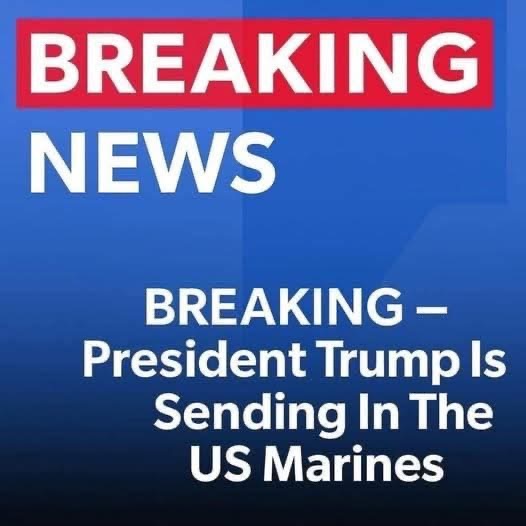
The United States military has formally acknowledged the deployment of approximately 200 U.S. Marines to the state of Florida, a decision that has quickly become a focal point of national discussion and debate. This deployment, confirmed through official government channels, is intended to support the operations of the U.S. Immigration and Customs Enforcement (ICE), specifically through logistical, clerical, and administrative assistance. Although the Marines will not be engaging in direct law enforcement activities, arrests, or combat-related operations, the announcement has nevertheless raised important political, legal, and ethical questions regarding the role of the military in domestic affairs.
The decision comes at a time when immigration enforcement and border management remain among the most scrutinized and polarizing policy areas in the United States. Florida, in particular, has experienced increased pressure on immigration infrastructure due to rising numbers of migrants arriving at processing centers. These developments have strained administrative systems, leading federal authorities to seek additional support to manage growing workloads. According to statements from the United States Department of Defense (DoD), the deployment of Marines is intended to alleviate administrative bottlenecks and allow ICE personnel to concentrate on their primary enforcement responsibilities.
Military officials emphasized that the Marines assigned to this mission will operate strictly within legally defined boundaries. Their duties are expected to include processing documentation, managing records, coordinating transportation logistics, and assisting with facility operations. These responsibilities, according to the DoD, fall under permissible categories of domestic military support as outlined in federal law. The Pentagon has described the deployment as an exceptional but lawful measure designed to enhance operational efficiency during a period of heightened demand.
Despite these assurances, the move has ignited criticism from civil rights advocates, legal scholars, and some political leaders. Critics argue that involving military personnel—even in non-enforcement roles—risks eroding the long-standing separation between civilian law enforcement and the armed forces. This separation has historically been viewed as a cornerstone of democratic governance in the United States, designed to prevent the concentration of coercive power and protect civil liberties. Opponents warn that normalizing military involvement in domestic immigration operations could set a precedent that weakens these safeguards over time.
Legal experts have pointed to statutes such as the Posse Comitatus Act, which restricts the use of federal military forces in domestic law enforcement activities. While the Act allows for certain exceptions and support roles, critics contend that its spirit could be undermined if military deployments become more routine in civilian contexts. They argue that even administrative assistance may carry symbolic weight, potentially signaling an increasing militarization of immigration policy.
Supporters of the deployment offer a different perspective. They maintain that the Marines’ involvement is a practical response to logistical challenges rather than a shift in enforcement philosophy. Proponents emphasize that ICE has faced heavy administrative demands associated with processing large numbers of migrants, including paperwork, data entry, transportation coordination, and facility management. By delegating these responsibilities to trained military personnel, ICE agents can devote more time and resources to their core missions, which supporters argue will improve overall operational efficiency.
Advocates further note that the U.S. military has a long history of providing domestic support during emergencies and large-scale operations, including disaster relief, public health crises, and infrastructure assistance. From this perspective, the deployment is consistent with established practices of interagency cooperation. Supporters argue that as long as clear boundaries are maintained and legal guidelines are followed, such collaboration does not inherently threaten civil liberties.
To address concerns about legality and oversight, the Department of Defense has stated that all Marines participating in the deployment will receive specialized orientation and training. This preparation is intended to ensure compliance with federal laws governing domestic military involvement, as well as respect for constitutional protections and individual rights. Military leaders have underscored that the Marines will not carry out arrests, detentions, or security enforcement activities.
The timing of the deployment has shaped public reaction. Immigration remains a highly charged political issue, particularly in Florida, where state and local authorities have taken strong positions on border enforcement and migrant processing. The arrival of Marines has intensified scrutiny from lawmakers, advocacy organizations, and the media. Some elected officials have welcomed the additional support as a necessary measure to address administrative backlogs and maintain orderly operations. Others have questioned whether the deployment could escalate tensions or contribute to negative public perceptions of immigration enforcement.
Local community leaders have expressed mixed reactions. Some praise the federal government for responding proactively to operational challenges, arguing that efficient processing benefits both migrants and host communities by reducing delays and uncertainty. Others have voiced concern about the symbolic implications of military involvement, suggesting that it may reinforce narratives portraying migration primarily as a security issue.
Immigration advocacy groups have called for increased transparency and independent oversight to ensure that the Marines’ role remains strictly limited to administrative support. These organizations emphasize the importance of safeguarding due process protections for migrants, including access to legal representation and fair treatment within the immigration system.
Political analysts suggest the deployment may have broader implications for civil-military relations in the United States. While existing legal frameworks permit military support in domestic operations under certain conditions, the visibility and frequency of such deployments can influence public expectations and institutional norms. Observers note that how this initiative is perceived—and whether it achieves its stated objectives—may shape future decisions regarding military assistance in civilian contexts.
From a policy standpoint, the deployment raises questions about long-term solutions to administrative challenges within immigration enforcement agencies. Some experts argue that reliance on military personnel highlights structural issues such as staffing shortages and outdated systems. They contend that sustainable reform should focus on strengthening civilian agencies. Others counter that temporary military support can provide immediate relief while longer-term reforms are pursued.
ICE officials have stated that the deployment is temporary and narrowly defined. According to agency statements, the Marines will be withdrawn once administrative backlogs are reduced and operational capacity stabilizes. Leadership has expressed hope that the additional support will improve processing times, reduce stress on personnel, and minimize disruptions at facilities.
As the deployment proceeds, federal authorities plan to conduct ongoing assessments to evaluate its effectiveness and compliance with legal standards. Metrics under consideration include processing efficiency, operational coordination, and adherence to civil liberties protections. Lessons learned from this initiative may inform future interagency collaborations involving large-scale logistical demands.
The broader debate reflects enduring tensions in U.S. governance between security, efficiency, and civil liberties. Immigration policy sits at the intersection of these concerns, making it particularly sensitive to changes in enforcement practices and institutional roles. The involvement of the military, even in a limited capacity, has intensified these discussions by raising questions about the appropriate boundaries between civilian and military institutions in a democratic society.
As developments continue, attention will likely remain focused on how the Marines conduct their assigned duties and how affected communities respond. The outcomes of this deployment may influence future policy decisions and shape public trust in both immigration enforcement and the military’s domestic role.