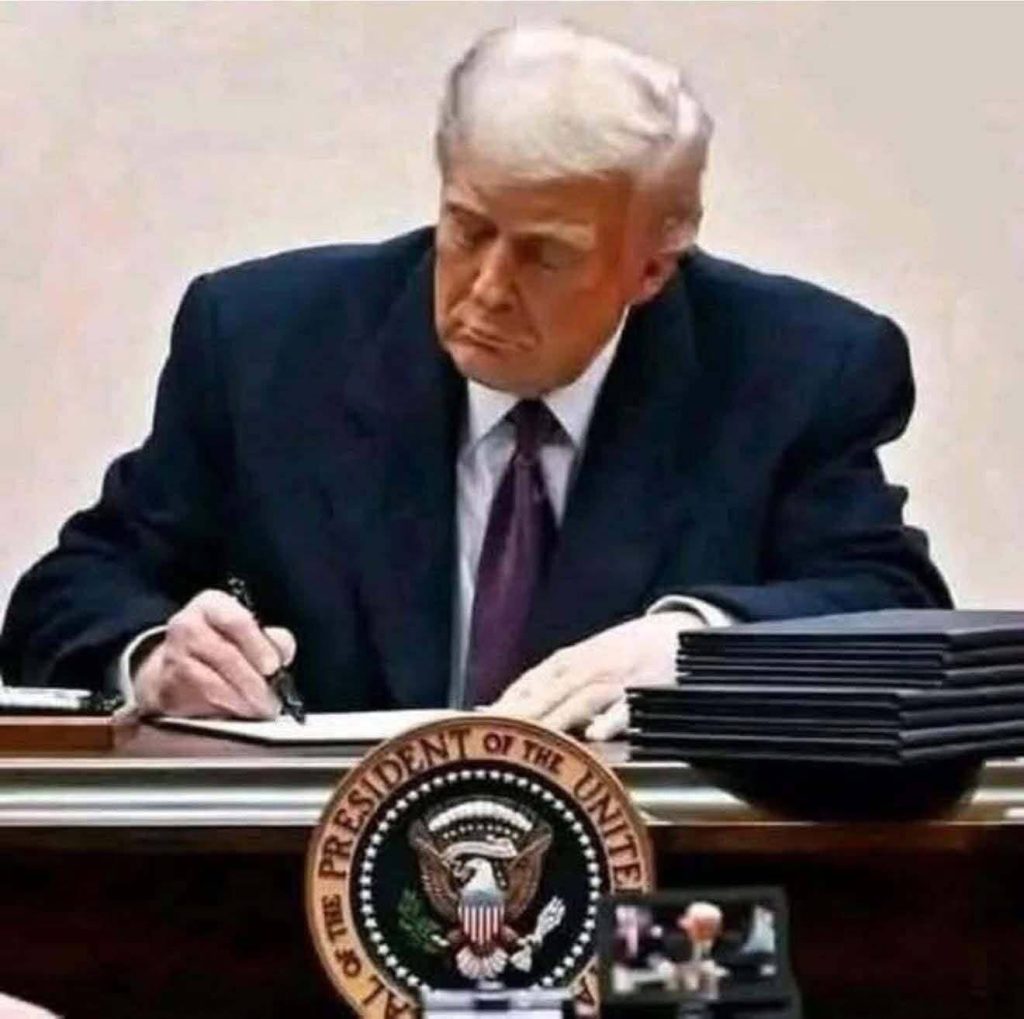
President Donald Trump has signed a new executive order directing federal agencies to begin designing a U.S. sovereign wealth fund, marking a significant shift in long-term federal investment strategy.
The order instructs the United States Department of the Treasury and the United States Department of Commerce to jointly develop a framework for the proposed fund. The initiative aims to centralize and modernize how the federal government invests capital in sectors deemed critical to national prosperity and security.
A sovereign wealth fund is a government-owned investment vehicle that manages public assets to generate long-term returns. Such funds are commonly used by countries seeking to diversify national wealth, stabilize economic cycles, and strategically support key industries. These funds typically invest in equities, bonds, infrastructure, real estate, and other assets.
According to the executive order, the proposed U.S. fund would not replace existing federal programs but instead complement them. Programs already supporting infrastructure, research, and industrial growth would remain operational. The new fund would serve as an additional strategic tool to direct capital toward projects with measurable economic impact.
Supporters argue the move could strengthen domestic industries, reinforce supply chains, and accelerate innovation in areas such as advanced manufacturing, energy infrastructure, and emerging technologies. By taking a more active investment role, the federal government would seek to enhance competitiveness in an increasingly contested global economy.
The order emphasizes transparency and fiscal responsibility. Treasury and Commerce officials are tasked with identifying potential funding sources, establishing governance structures, and implementing oversight mechanisms. Regular reporting, independent audits, and clearly defined investment criteria are expected to form the backbone of the fund’s accountability system.
Critics, however, have raised concerns about increased government participation in private markets. Some warn that state-directed investments could distort competition or blur the line between regulatory authority and financial involvement. Calls for congressional oversight and bipartisan review have accompanied the proposal.
International comparisons have entered the discussion. Countries such as Norway and Singapore operate established sovereign wealth funds that manage national assets with long-term perspectives. While their funding sources often stem from natural resource revenues or trade surpluses, the United States would need to identify sustainable financing methods aligned with its fiscal structure.
Implementation of the initiative is expected to include feasibility studies, stakeholder consultations, and economic impact assessments. Officials indicate that operational details will take months to finalize, as governance standards and legal considerations are refined.
Analysts note that the success of the proposed fund will depend heavily on risk management, diversification strategies, and strict safeguards against politically motivated investment decisions. If structured effectively, proponents suggest the fund could generate returns that strengthen public finances over time. If poorly managed, it could expose taxpayers to financial risk.
The executive order establishes a framework rather than a fully operational entity. Legislative cooperation, regulatory development, and institutional design will determine how the fund ultimately functions.
The proposal reflects a broader debate over the role of government in long-term economic planning. Advocates see strategic federal investment as a tool to navigate economic uncertainty and global competition. Opponents emphasize the importance of preserving market-driven capital allocation.
As discussions continue, policymakers and economists will assess the potential benefits and risks of this new direction in federal investment policy. The sovereign wealth fund concept introduces a structural change that could reshape how the United States approaches national economic resilience and strategic growth.