In modern residential design, the kitchen has evolved far beyond its traditional role as a simple place for cooking. Today it is often the heart of the home—a social gathering space, a visual focal point, and a reflection of personal style. However, even in carefully designed kitchens, one persistent problem remains: limited space. Small gaps frequently appear between appliances, cabinets, and walls. These narrow openings, often measuring between three and six inches, have long been considered unavoidable flaws in kitchen layouts.
Traditionally, these tight spaces served little purpose. They often became hidden areas where dust, crumbs, or dropped utensils accumulated. In many homes, these gaps simply remained unused because they seemed too small to serve any practical function. Yet advances in cabinet engineering and interior design have transformed how these spaces are viewed. What once seemed like wasted space is now recognized as an opportunity for highly efficient storage.
One of the most innovative solutions to this problem is the narrow filler pull-out cabinet. Instead of leaving slim gaps empty, designers now convert them into vertical storage units that maximize functionality without compromising the kitchen’s visual harmony. These cabinets represent a broader shift in modern design philosophy—one that prioritizes efficiency, organization, and intelligent use of space.
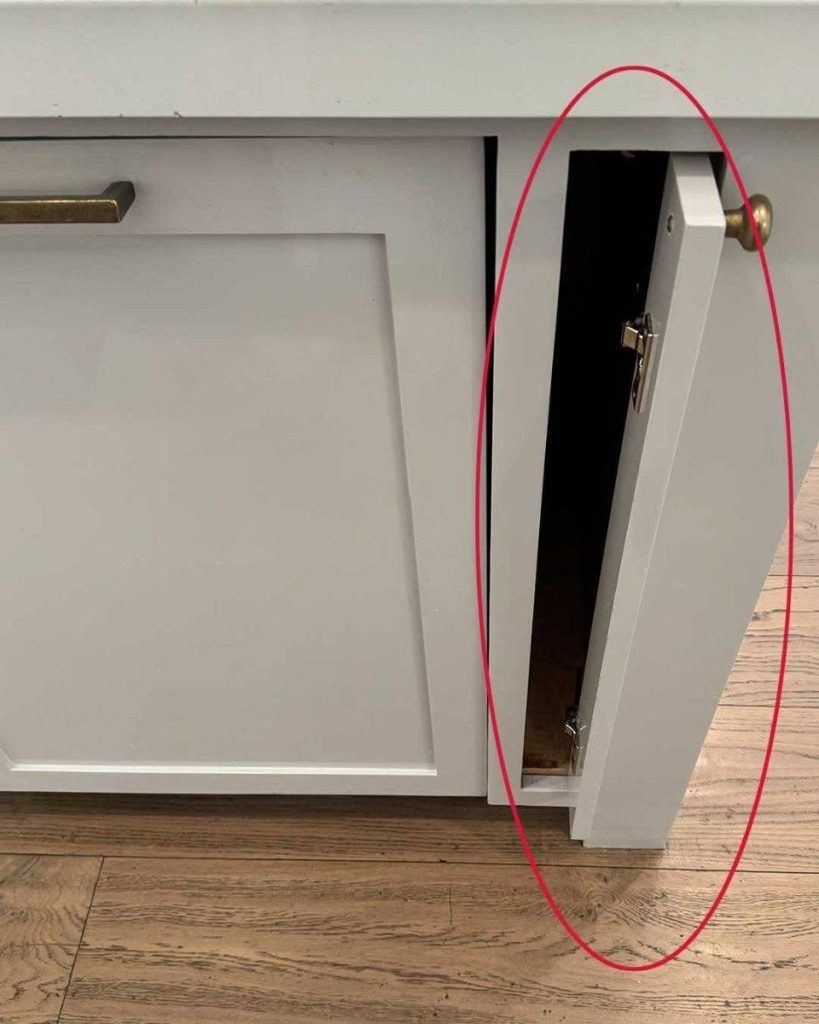
When closed, a filler pull-out cabinet appears almost invisible. It typically looks like a simple vertical panel that matches the surrounding cabinetry in color, finish, and design. This subtle appearance is intentional. Contemporary kitchens often emphasize clean lines and uncluttered surfaces, and these cabinets blend seamlessly into the overall layout.
The transformation happens when the cabinet is opened. With a gentle pull, the narrow panel slides forward smoothly on specialized runners, revealing a tall, organized storage system hidden within the slim space. What initially appeared to be a decorative filler panel suddenly becomes a functional column of storage.
Designing these cabinets requires careful engineering. Because they operate within extremely narrow widths, stability and durability are essential. High-quality systems rely on full-extension ball-bearing slides that allow the cabinet to glide smoothly even when loaded with heavy items. These runners ensure that the cabinet remains balanced and easy to operate.
Inside, the cabinet’s design is surprisingly versatile. Many models include adjustable shelves, metal guard rails, or modular compartments that can be arranged according to individual needs. This flexibility allows homeowners to adapt the storage space for different items.
For example, some people use these cabinets to organize spice jars, cooking oils, or condiments. Others use them for baking trays, cutting boards, aluminum foil, or parchment paper—items that are often difficult to store efficiently in traditional cabinets.
Beyond storage, filler pull-out cabinets significantly improve kitchen ergonomics. Deep base cabinets often make it difficult to reach items stored at the back. People frequently need to bend down or move multiple objects just to reach one item. Over time, this leads to frustration, wasted time, and unnecessary clutter.
Pull-out cabinets solve this problem by providing full visibility and easy access. When the cabinet is opened, every item becomes immediately visible and reachable. This eliminates the need to search through dark cabinet interiors or stack items awkwardly.
Despite their benefits, some people assume that such narrow cabinets cannot provide meaningful storage. However, this perception often overlooks how vertical space works. While a few inches of width may seem insignificant, when extended vertically through the full height and depth of a cabinet, the storage capacity becomes surprisingly useful—especially for smaller items.
Another advantage of these cabinets is their positive impact on overall kitchen organization. By storing small and frequently used items in dedicated pull-out spaces, larger cabinets remain free for bulky cookware, appliances, and serving dishes. This separation helps maintain a more orderly kitchen.
Modern pull-out cabinets are also far more reliable than earlier versions. Advances in manufacturing have produced stronger runners, smoother sliding mechanisms, and soft-close systems that prevent slamming. These improvements ensure durability while also adding a touch of refinement.
Maintenance is minimal. Occasional cleaning and checking the sliding hardware are usually enough to keep the cabinet functioning properly for years. Additionally, while these systems are often installed during kitchen renovations, many can also be added later through retrofit kits if small gaps already exist in the layout.
The growing popularity of filler pull-out cabinets reflects a larger trend in modern interior design: maximizing every inch of space. As homes and apartments—particularly in urban environments—become more compact, efficient storage solutions are increasingly important.
Ultimately, the value of these cabinets lies not in their size but in their ability to transform overlooked spaces into practical assets. By turning unused gaps into functional storage, filler pull-out cabinets help create kitchens that are more organized, efficient, and visually balanced.