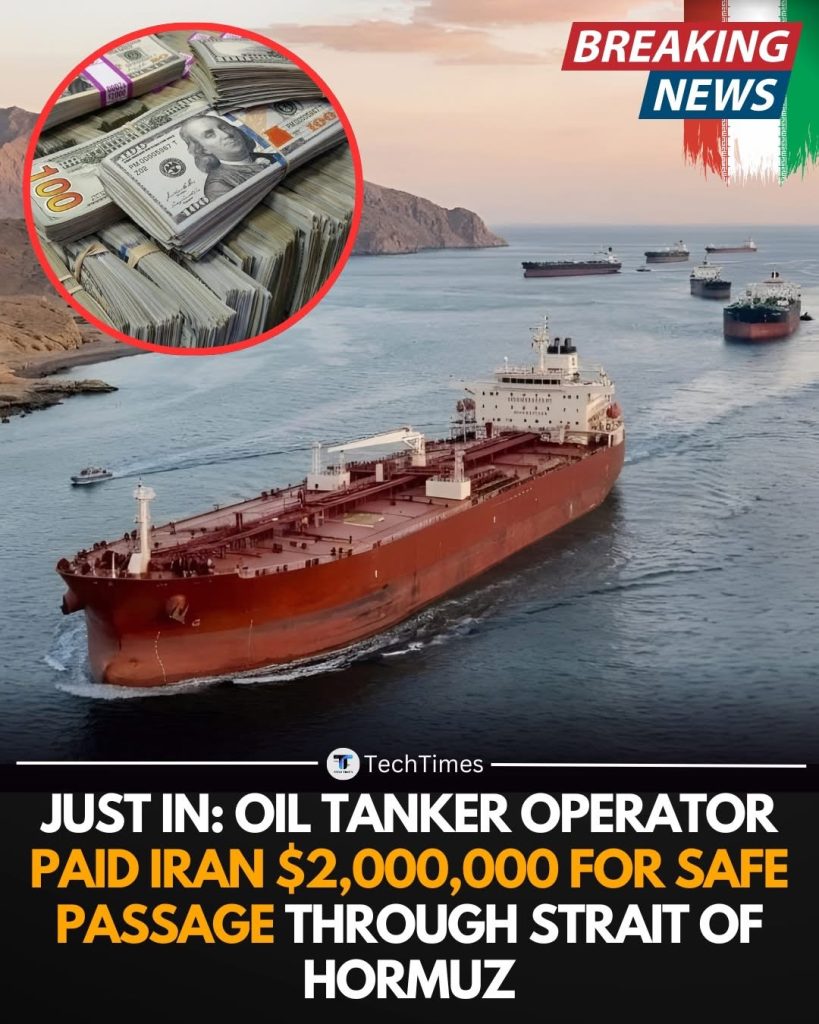
In a move that could redefine international maritime norms, a major oil tanker operator has reportedly paid $2 million to Iranian authorities to secure safe passage through the Strait of Hormuz, according to multiple sources. This unprecedented payment represents the first confirmed instance of a private company succumbing to Tehran’s proposed toll system, bypassing established international “transit passage” rights protected under the United Nations Convention on the Law of the Sea.
The tanker operator, whose identity remains confidential for legal and security reasons, allegedly authorized the payment after insurance premiums for Gulf shipping surged to unsustainable levels following repeated drone and missile strikes on regional energy infrastructure. Industry insiders say that by paying for “guaranteed security,” the company was able to move high-value crude shipments without risking delays, potential confrontations with naval forces, or the threat of vessel damage.
Maritime law experts and international organizations have responded with concern. “This sets a dangerous precedent,” said one analyst familiar with the incident. “If other corporations follow suit, the Strait of Hormuz could shift from being a free international waterway into a high-cost private toll route. That would fundamentally alter the dynamics of global oil trade and navigation.”
The Strait of Hormuz, a narrow chokepoint linking the Persian Gulf to the Gulf of Oman, is one of the world’s most strategically vital waterways. Approximately 20% of the world’s oil passes through the strait, making any disruption potentially catastrophic for energy markets. Analysts warn that normalization of payments like the $2 million fee could allow Tehran to generate billions annually, effectively monetizing the threat it poses to maritime security.
U.S. officials, along with European allies, are reportedly reviewing the legal implications of such payments under current sanctions frameworks. Critics argue that these fees function as a form of “state-sponsored protection money,” directly funding the very military capabilities that have made the strait unsafe. “By paying for passage, companies may inadvertently be financing the threats they are trying to avoid,” said a Washington-based maritime security expert.
Industry observers also point to potential ripple effects across global energy markets. Higher shipping costs could translate to increased prices for crude oil and refined products, affecting consumers worldwide. Some insurance companies have already signaled that such payments could reshape risk calculations, potentially leading to broader adoption of similar “security fees” in other volatile regions.
The payment comes amid heightened tensions in the Gulf, with repeated attacks on oil infrastructure, naval incidents, and continued uncertainty over Iran’s regional policies. While this $2 million transaction may be viewed by some as a pragmatic business decision, it raises urgent questions about the future of international maritime law and the enforceability of transit passage rights.
As global energy markets teeter on a knife-edge, policymakers, shipping companies, and international bodies face a stark choice: either enforce existing legal protections or risk creating a new, unregulated economy in one of the world’s most critical waterways.