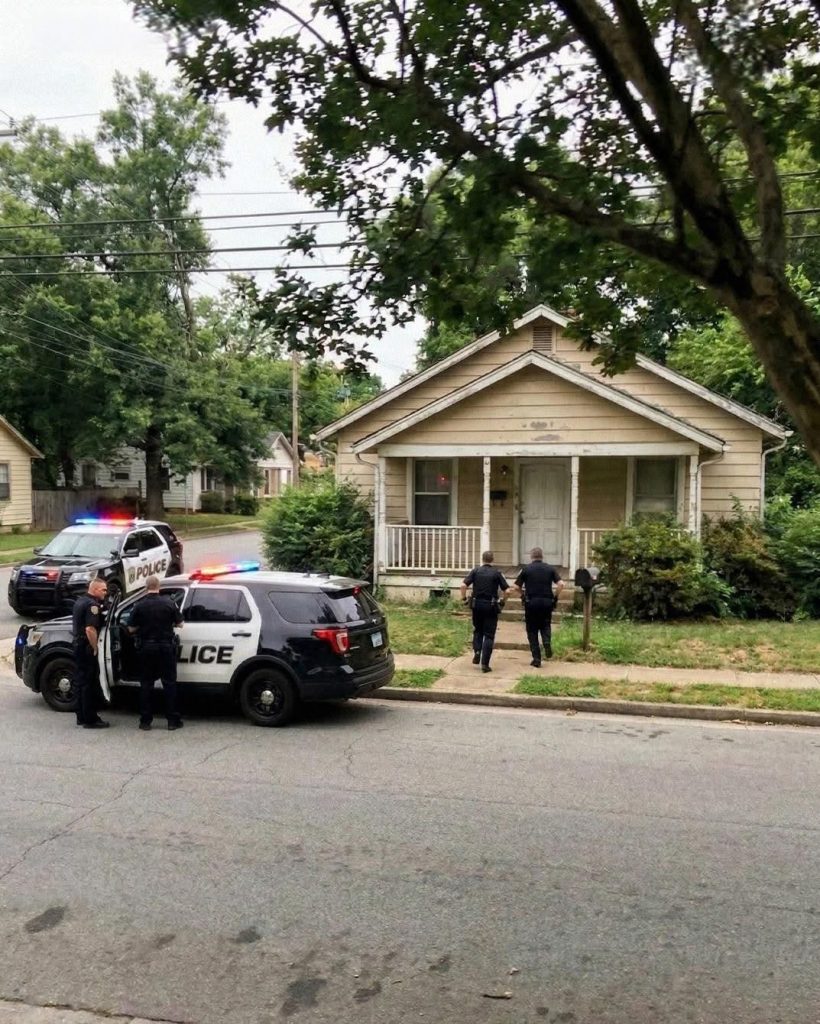
When my grandmother passed away, she didn’t leave behind wealth or valuable possessions. Instead, she left me something far more personal—a small, fully paid brick house in what appeared to be a quiet, well-kept neighborhood. At first glance, it looked ideal: trimmed hedges, clean sidewalks, and peaceful streets where nothing seemed out of place.
But sometimes, the quietest places hide the darkest truths.
A Strange Welcome
I moved in two weeks after her funeral, hoping the house would bring comfort. Instead, from the moment I arrived, something felt off.
The silence wasn’t peaceful—it felt watchful.
As I unloaded my belongings, I noticed curtains shifting in nearby houses. Subtle, almost unnoticeable, but enough to tell me I was being observed.
My first interaction came quickly.
A woman introduced herself as Mrs. Keller. She stood across the street, posture perfect, arms folded, her smile tight.
“Welcome,” she said politely. “We like to keep things… tidy around here.”
It sounded less like a greeting—and more like a warning.
The Letters
Days later, while going through my grandmother’s belongings, I found five sealed envelopes hidden beneath her clothes. Each one had a name written on it:
- Mrs. Keller
- Don
- Lydia
- Jared
- Marnie
On top was a note in her handwriting:
“After I’m gone, deliver these.”
Assuming they were farewell messages, I took the first letter to Mrs. Keller.
The moment she saw the handwriting, her expression changed.
Not sadness. Not nostalgia.
Fear.
She said nothing, simply took the envelope and closed the door.
Less than an hour later, police cars arrived.
A Warning
When I approached an officer, he asked me directly:
“Did you deliver a letter here?”
I nodded.
“She reported it as threatening,” he said. “It contained documents and a flash drive.”
Nothing made sense.
Before leaving, he gave me one piece of advice:
“Do not open the others.”
The Truth Revealed
Back inside, curiosity took over.
I opened the next envelope.
Inside was a document titled:
“Timeline of Incidents.”
Page after page detailed disturbances—neighbors entering the yard, false complaints, unexplained events.
The next letters revealed even more:
- A list of missing belongings
- A detailed map of blind spots around the house
- A statement that began:
“If anything happens to me, this is why.”
A pattern emerged.
This wasn’t paranoia.
It was deliberate.
My grandmother had been targeted—isolated, manipulated, and discredited over time.
Suddenly, the neighborhood made sense.
The silence. The watching. The forced politeness.
It wasn’t peaceful.
It was controlled.
The Investigation
That evening, Detective Rios arrived.
After reviewing everything, she said:
“This is known as elder targeting. Sometimes called elder bullying.”
Groups isolate vulnerable individuals, undermine their credibility, and make them seem unreliable—so no one believes them.
“They thought she was weak,” she said. “But she was documenting everything.”
The Trap
Two nights later, we waited.
The house was dark, silent—but not empty.
A hidden camera my grandmother had installed captured everything.
At 11:30 PM, three figures entered the yard:
Mrs. Keller. Don. Lydia.
They whispered as they searched.
“The papers,” one said. “We have to find them.”
Moments later, police surrounded them.
Everything collapsed.
Aftermath
Within days, the neighborhood changed.
The tension was gone. The silence felt real—not forced.
While sorting through the last of my grandmother’s belongings, I found one final note addressed to me:
“I was afraid sometimes, but I was prouder than I was afraid.”
She didn’t want her story rewritten as weakness.
She wanted the truth to be known.
A Final Reflection
That evening, I stood on the porch and touched her wind chimes.
They rang softly—then stronger.
Clear. Steady.
Like a voice that refused to be silenced.
She hadn’t just left me a house.
She left me the truth.
And the courage to carry it forward.