March 2026
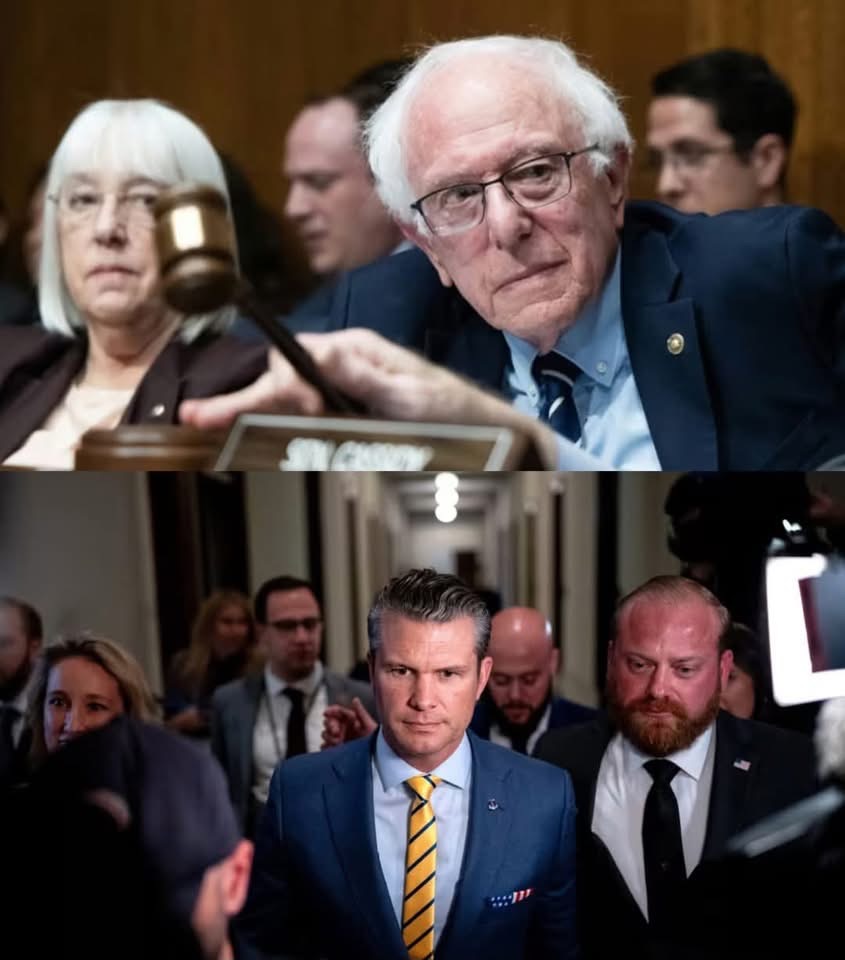
A heated political debate has erupted in Washington after Bernie Sanders sharply criticized a reported $200 billion military funding proposal linked to Pentagon leadership under Donald Trump and Defense Secretary Pete Hegseth.
In a widely circulated exchange, Sanders questioned the justification for allocating such a massive sum toward military operations, arguing that the funding reflects misplaced national priorities at a time when many Americans are facing serious economic challenges.
“People can’t afford healthcare. People can’t afford childcare,” Sanders said, emphasizing that additional war spending comes while millions struggle with rising living costs.
A Growing Budget Controversy
The proposed $200 billion allocation—described as supplemental defense spending—has quickly become a flashpoint in Congress. Critics argue that the scale of the request far exceeds initial projections and lacks sufficient clarity regarding long-term objectives, costs, and outcomes.
Supporters of increased defense funding maintain that national security threats require strong and immediate responses. However, opponents are questioning whether such spending is justified without a clearly defined mission or formal congressional authorization.
The debate is also intensifying as reports suggest that the cost of ongoing military operations could exceed $1 billion per day, adding urgency to concerns about long-term fiscal sustainability.
Domestic Needs vs. Military Spending
At the center of Sanders’ argument is a broader issue: the balance between defense spending and domestic investment.
He pointed to the financial strain many Americans are currently facing, including rising housing costs, limited access to affordable healthcare, and challenges related to childcare. According to recent economic data, a significant portion of U.S. households are spending a large share of their income on basic living expenses, leaving little room for savings or emergencies.
Sanders and like-minded policymakers argue that the proposed $200 billion could instead be used to address critical domestic programs. These include healthcare coverage, food assistance initiatives, and support for veterans—areas that have faced ongoing funding debates.
Concerns Over Oversight and Strategy
Another major point of contention is the lack of a clearly defined strategy tied to the proposed funding. Critics warn that without specific objectives, timelines, and accountability measures, the U.S. risks repeating past military engagements that resulted in prolonged conflict and significant financial cost.
Historical comparisons have already begun to surface, with some lawmakers referencing past wars where spending escalated far beyond initial expectations without delivering clear outcomes.
Political and Public Reaction
The exchange has sparked widespread discussion across political lines. Supporters of Sanders view his remarks as a necessary challenge to what they see as excessive military spending, while others argue that strong defense funding remains essential in an increasingly unstable global environment.
Public reaction has also been mixed, reflecting broader divisions over how government resources should be allocated. For many Americans, the debate highlights a fundamental question: should priority be given to international security efforts or domestic economic stability?
What Comes Next
As Congress prepares to review the proposal, lawmakers are expected to face increasing pressure from both sides. The outcome could shape not only defense policy but also broader budget negotiations in the months ahead.
For now, Sanders’ remarks have brought renewed attention to the issue, framing the debate in stark terms: how should the United States balance its role on the global stage with the needs of its own citizens?
The answer to that question may define the next phase of political and economic decision-making in Washington.