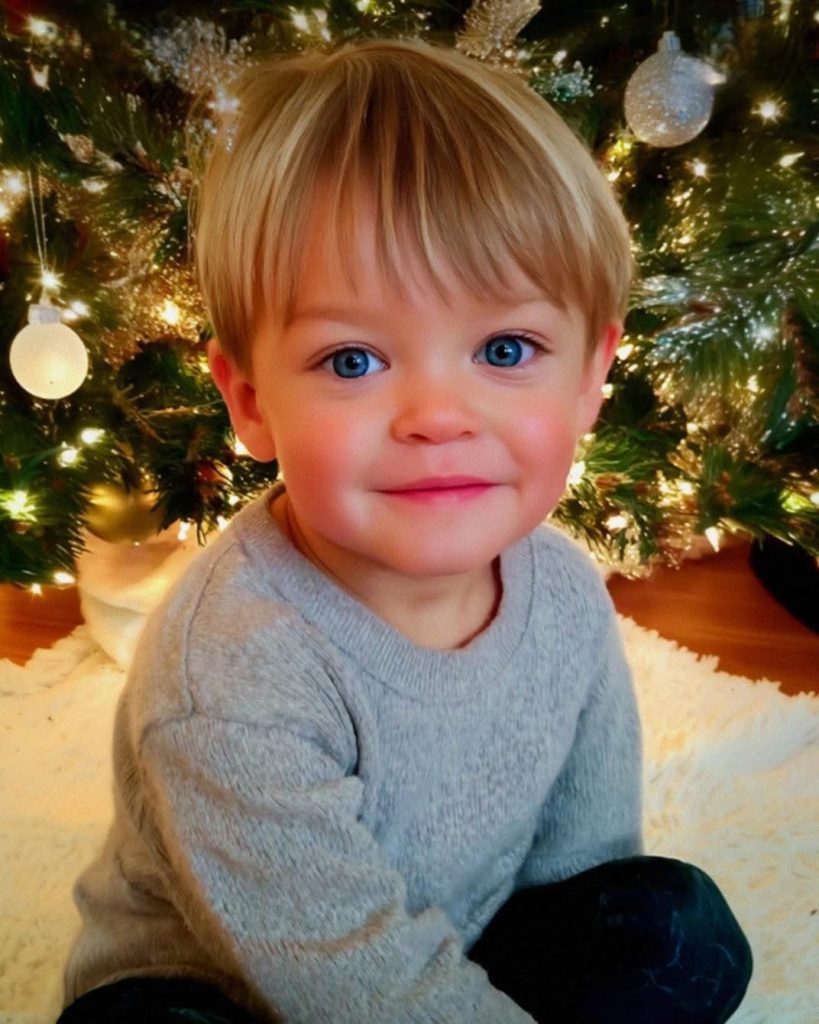
We brought our son home on a cold winter morning, just before the holidays. The house was quiet then — the kind of quiet that echoes — and it felt far too large for the two of us. He was three years old.
He sat near the Christmas tree, not playing, just observing. His small hands rested awkwardly in his lap, as if he wasn’t sure what they were allowed to touch. The lights reflected in his blue eyes while he studied the room carefully, like someone memorizing a place they might not be allowed to stay. When he looked up at us, his smile was hesitant — more question than happiness.
His file was short, but the words carried weight.
“Several placements.”
“Reserved.”
“Speech delays.”
People often ask why we chose him, as if love requires a checklist. The truth is, he didn’t perform for us. He didn’t reach out. He didn’t cry. He simply watched — quietly, cautiously. And in that stillness, we saw a child who had learned early that expecting too much only led to disappointment.
The nights came with challenges. He woke up frightened, confused, crying without calling anyone’s name. Loud noises startled him. He hid food in strange places, unsure when the next meal would come. Once, while I was speaking loudly on the phone, he crawled under the table and covered his ears. In that moment, I understood how deeply instability can scar a child who never had the words to explain what hurt.
Change didn’t happen all at once. It came in small, almost invisible steps.
He laughed at silly songs.
He slept longer, as long as the door stayed open.
One night during a movie, he leaned against me — briefly, cautiously — as if testing whether I’d move away. I didn’t. Trust doesn’t announce itself. It arrives quietly, afraid of being rejected.
The first time he called me “Mom,” it wasn’t rehearsed. He was focused on stacking blocks when the word slipped out. He froze, eyes wide, waiting for something bad to happen — like he’d crossed an invisible line. I told him gently that he didn’t have to call me anything until he wanted to. He nodded, relieved.
A few minutes later, he said it again.
This time, he smiled.
People sometimes say, “You saved him.”
They don’t understand.
He saved us.
He taught us patience we didn’t know we had. He showed us what love looks like when it’s built slowly, carefully, without guarantees. He isn’t a story of rescue. He is our child.
And every day, when he runs toward us without hesitation, we’re reminded of something powerful:
Family isn’t found.
It’s created — one moment of safety, trust, and love at a time.