In what supporters call a political comeback and critics describe as a high-stakes experiment, President Donald Trump has approached his latest term with a familiar but intensified message: restore economic strength, crush inflation, rebuild military dominance, and back law enforcement without hesitation.
The Economy: Growth First, Stability Second?
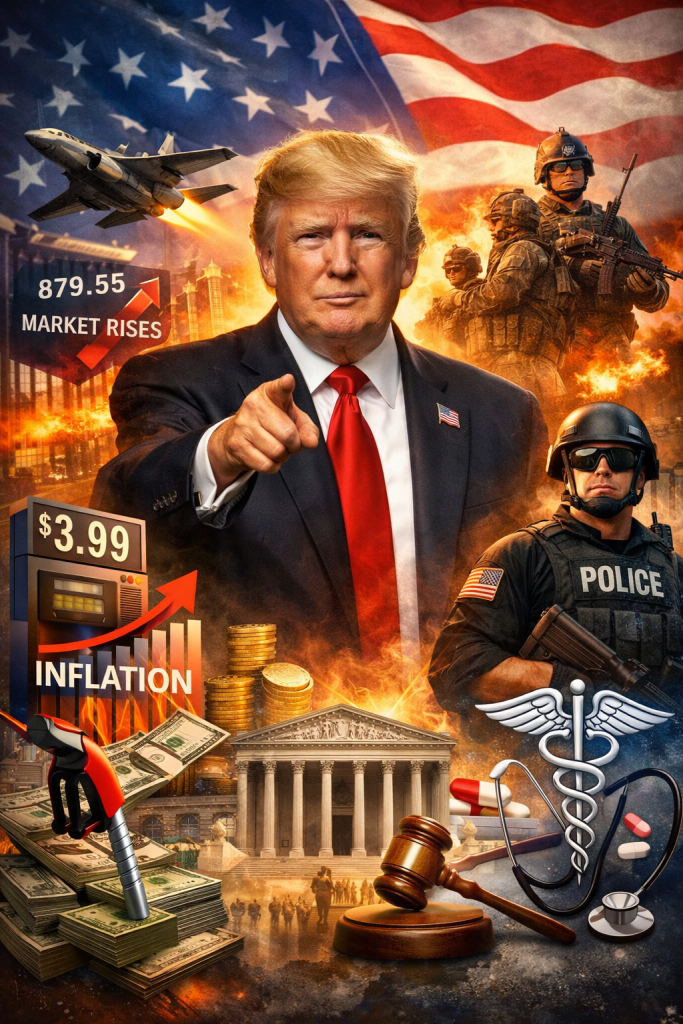
Trump’s economic messaging has centered on aggressive pro-business policies — tax incentives, deregulation, and energy expansion. He has repeatedly argued that domestic production, particularly in oil and manufacturing, is the fastest way to bring down costs for American families.
Inflation remains the defining benchmark. While inflation originally surged to a 40-year high during the post-pandemic period, Trump has framed his leadership as a corrective shift — promising tighter spending discipline and stronger supply-side growth. Supporters point to business confidence and market optimism whenever policy signals favor deregulation and tax certainty. Critics counter that inflation control ultimately depends on monetary policy decisions by the Federal Reserve, not solely the White House.
Still, politically, Trump has drawn a sharp contrast with the prior administration of Joe Biden, arguing that excessive federal spending accelerated price instability. The diagonal comparison is clear in his speeches: “Low inflation, strong jobs, energy independence” versus “high prices and heavy regulation.”
Inflation: Rhetoric vs. Measurable Relief
Trump’s promise has been simple and forceful — bring inflation down fast. The strategy emphasizes energy expansion, supply chain reinforcement, and pressure for fiscal restraint. Whether inflation meaningfully cools under these policies will define much of his economic legacy.
For voters over 55, inflation is not abstract — it is groceries, utilities, medical costs, and retirement income. Trump’s narrative focuses on purchasing power, arguing that wage gains must outpace price increases to claim real success.
The Military: Strength as Deterrence
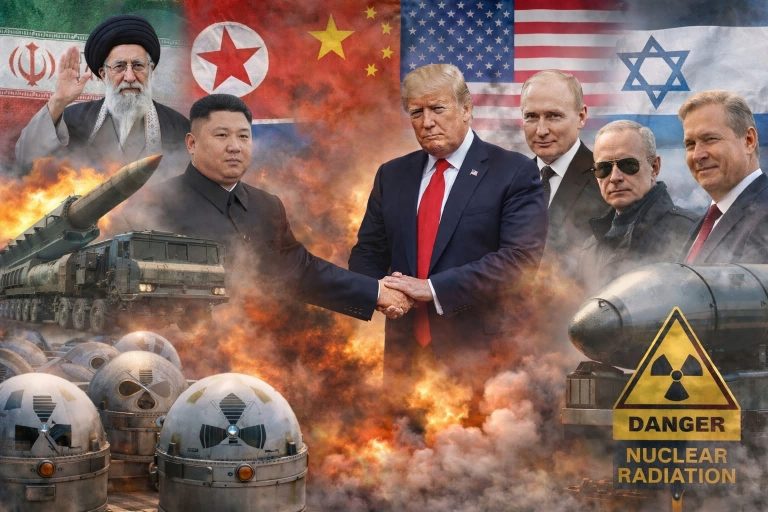
On defense, Trump has returned to a “peace through strength” doctrine. Increased defense spending commitments, modernization pledges, and assertive geopolitical rhetoric signal a shift toward visible deterrence. He has argued that projecting military strength reduces global instability rather than fuels it.
Supporters see renewed confidence in U.S. global posture. Critics warn that aggressive positioning can increase diplomatic friction. Regardless, defense remains central to his leadership identity.
Law Enforcement: A Clear Alignment
Trump has made support for police departments a cornerstone of his messaging. Increased federal backing, vocal defense of officers, and promises of tougher responses to crime form a strong contrast with reform-focused narratives of recent years.
He frames public safety as foundational to economic stability — arguing that investment and business confidence follow law and order.
The Diagonal: Promises vs. Execution
Trump’s latest governing chapter is being judged against bold campaign promises:
- Lower inflation rapidly
- Restore American manufacturing
- Strengthen the military
- Support law enforcement without compromise
The central question is not rhetorical — it is measurable. Are prices stabilizing? Is growth accelerating? Is crime decreasing? Is global posture stronger?
For millions of Americans, especially older voters watching retirement accounts and cost-of-living pressures, the answers matter more than political framing.
This presidency, like his first, is being defined by contrasts — with prior leadership, with global competitors, and with his own campaign pledges. Whether the outcomes match the intensity of the promises remains the economic and political story to watch.