Tensions in the Middle East have surged dramatically following a chain of military actions involving Iran, the United States, and Israel, pushing the region to one of its most volatile moments in recent years. Below is a breakdown of the key developments that have fueled fears of a wider conflict.
Phase 1: Coordinated Strikes Inside Iran
The crisis escalated after reported joint or parallel strikes by Israel and the United States targeting military-linked facilities inside Iran. Strategic infrastructure and suspected weapons sites were among the locations hit. Iranian officials condemned the attacks as acts of aggression and vowed retaliation.
State media in Tehran described the strikes as a “direct assault on sovereignty,” while regional observers warned that a counterstrike was likely imminent.
Phase 2: Iran Targets U.S. Military Presence in the Gulf
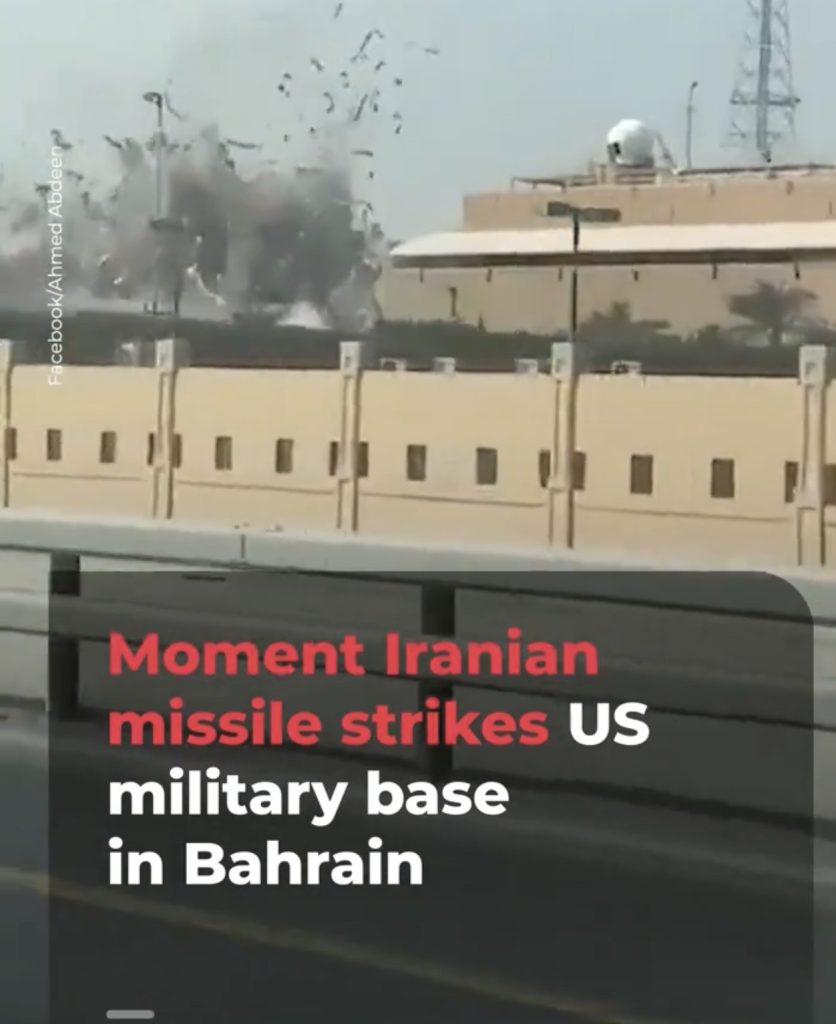
Within hours, Iran launched missiles toward a U.S. military installation in Bahrain, home to a major American naval base. Video footage circulating online showed plumes of smoke rising into the sky, sparking immediate concern of a broader military confrontation.
U.S. defense officials confirmed that air defense systems were activated. Initial reports suggested that several incoming projectiles were intercepted before impact, though debris reportedly fell near military zones.
Phase 3: Missile Interceptions Over Qatar
Two additional missiles were reportedly intercepted over Qatar, heightening alarm across Gulf states. Airspace monitoring systems were placed on high alert, and regional governments issued precautionary security advisories.
Defense sources indicated that allied missile defense systems worked in coordination to neutralize threats before they could reach populated areas.
Phase 4: Explosions Reported Across the Gulf
Residents in United Arab Emirates, Kuwait, and Saudi Arabia reported hearing loud explosions, though officials in several of these countries stated that the sounds were linked to defensive interceptions rather than direct impacts.
The rapid spread of shockwaves — both literal and political — intensified fears that the confrontation could expand beyond isolated strikes.
Phase 5: Diplomatic Fallout and Global Reaction
World leaders quickly called for restraint. Emergency diplomatic consultations were held at the United Nations, where officials warned that continued escalation could destabilize global energy markets and threaten international security.
Oil prices surged in early trading as investors reacted to the instability in one of the world’s most critical energy corridors.
What Happens Next?
Military analysts warn that the coming days will be decisive. If further retaliatory strikes occur, the crisis could spiral into a prolonged regional conflict involving multiple state and non-state actors.
For now, the Gulf remains on edge — air defenses activated, naval fleets repositioned, and diplomatic channels working overtime to prevent a full-scale war.