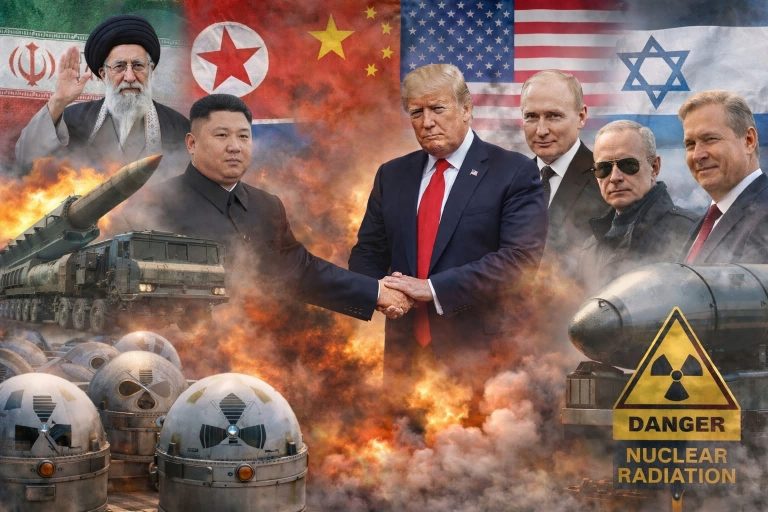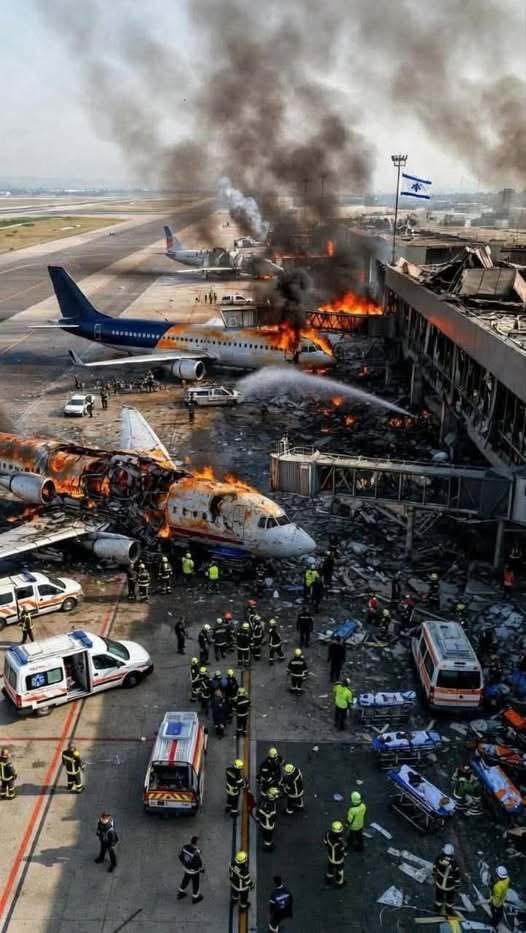
Sirens pierced the night. Airspace darkened. Radar screens lit up.
Reports of ballistic missile launches attributed to Iran sent shockwaves across the Persian Gulf, rattling a region long accustomed to tension — but not to sudden flashes in the sky. From Abu Dhabi to Bahrain, emergency alerts urged residents indoors as defensive systems activated and aviation authorities scrambled to suspend or reroute flights.
Official confirmations remain cautious and limited. But the psychological impact was immediate.
For hours, uncertainty became the dominant force in the region.
A Delicate Balance Disrupted
The Gulf has operated for years under what analysts describe as “managed confrontation.” Naval patrols shadow one another. Surveillance flights monitor movements. Diplomatic warnings are issued in calibrated language designed to deter without igniting open conflict.
That balance now appears shaken.
According to preliminary accounts, missile launches were detected late in the evening, triggering rapid defensive responses. Some projectiles were reportedly intercepted midair. Others may have landed near strategic installations, though damage assessments remain unclear.
The gap between detection and confirmation has fueled speculation — and anxiety.
Strategic Installations in the Spotlight
Several high-profile military sites quickly entered the conversation:
- Al Dhafra Air Base in the UAE
- Al Udeid Air Base in Qatar
- The U.S. Fifth Fleet headquarters in Bahrain
These facilities are not just military assets; they symbolize regional security architecture and multinational coordination. Any confirmed strike near such sites would represent a significant escalation.
Defense experts note that these bases are protected by layered air-defense systems designed to detect, track, and intercept incoming threats within seconds. Even so, the activation of those systems — interceptor launches, radar locks, explosions overhead — can be deeply unsettling for surrounding communities.
Civilian Life Interrupted
While military analysts focus on trajectories and interception rates, residents across the Gulf experienced something far more immediate: fear.
Families moved into interior rooms. Phones lit up with emergency alerts. Flights were diverted midair. Airports implemented contingency protocols. Schools prepared for possible closures.
Airspace shutdowns rippled outward, affecting international travel and cargo networks. The Gulf’s geographic role as a global aviation hub means even temporary restrictions can disrupt routes across Europe, Asia, and Africa within hours.
Uncertainty amplified everything.
The Information Vacuum
In fast-moving security events, the first casualty is clarity.
Governments typically verify data before issuing detailed statements. That verification process takes time. In the interim, social media fills the silence — sometimes accurately, often not.
Videos circulated widely overnight. Some appeared authentic. Others were misattributed or outdated. Authorities urged residents to rely on official channels and avoid spreading unconfirmed claims.
This information gap shapes not only public perception but diplomatic decision-making. Leaders must respond based on incomplete knowledge while trying to avoid escalation.
The Strategic Stakes
The Gulf remains one of the most geopolitically sensitive regions in the world. It sits at the crossroads of global energy supply, maritime trade routes, and major military deployments.
Even limited military incidents can trigger:
- Market volatility
- Oil price fluctuations
- Insurance cost increases
- Corporate contingency planning
- Emergency diplomatic outreach
Financial markets tend to react to headlines before full clarity emerges, underscoring how tightly connected modern geopolitics and economics have become.
Defense in Seconds
Modern missile defense is a race against time.
Early-warning radars detect launches within moments. Tracking systems calculate projected impact points. Interceptor missiles are launched if threats are confirmed. Electronic countermeasures may be activated simultaneously.
All of this unfolds in seconds.
Even successful interceptions can produce visible explosions in the sky, falling debris, and shockwaves that heighten public alarm. Prevention, in today’s security environment, is rarely quiet.
Diplomatic Channels Activate
Behind closed doors, communication lines likely intensified almost immediately. Embassies, defense ministries, and international intermediaries move quickly in such moments to clarify intent and prevent misinterpretation.
Allies issue statements urging restraint. International organizations monitor developments. Back-channel diplomacy often accelerates when public tension rises.
History shows that even serious confrontations do not always spiral into prolonged conflict. But history also shows how quickly miscalculation can override restraint.
A Region Waiting
For now, the defining characteristic of this moment is uncertainty.
How many missiles were launched?
What were the intended targets?
Was damage sustained?
Will retaliation follow?
Those questions remain central.
Residents across the Gulf are watching for official confirmation and signs of de-escalation. Markets are watching energy flows. Governments are watching military posture.
The difference between a contained incident and a broader crisis may depend on decisions made in the coming hours.
Conclusion
The reported missile activity targeting US-linked facilities in the Gulf has underscored the fragility of regional stability. Whether this episode becomes a brief spike in tension or a turning point toward wider confrontation will depend on verification, communication, and restraint.
One thing is already clear: the perception of normalcy can shift in minutes.
An ordinary evening became one of sirens, shutdowns, and global headlines.
And for now, an entire region remains on edge — waiting for clarity in the dark.