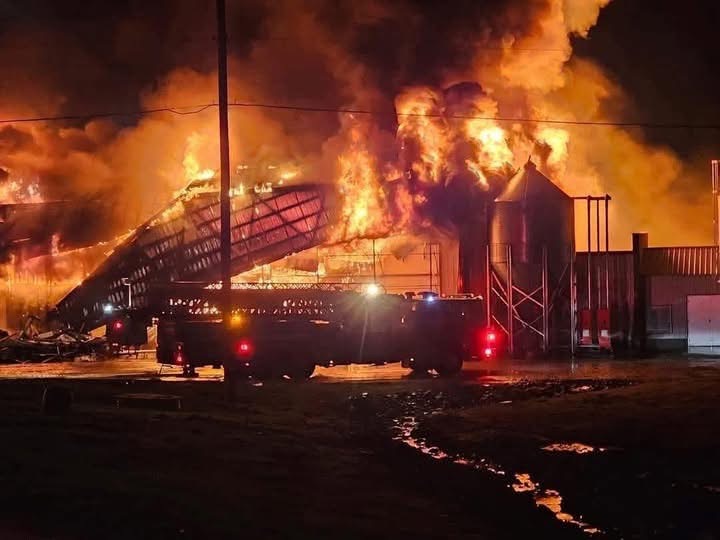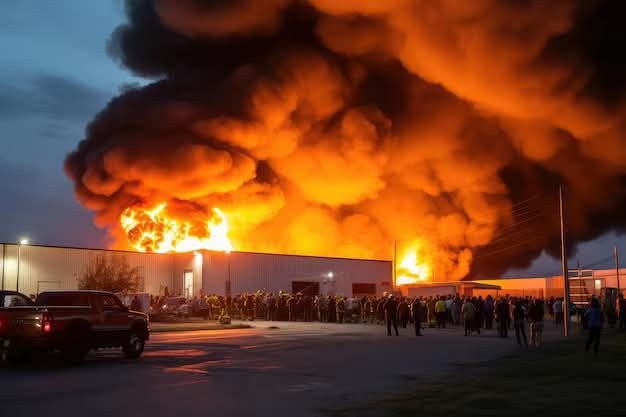
A devastating fire swept through a densely inhabited hillside community in southern Lima on Saturday afternoon, causing extensive destruction and abruptly displacing hundreds of families. The inferno broke out in the Pamplona Alta sector of the San Juan de Miraflores district, an area characterized by steep terrain, overcrowded living conditions, and a high concentration of informal housing. What began as a localized incident rapidly escalated into a large-scale disaster, overwhelming residents who initially attempted to contain the flames on their own.
Pamplona Alta is one of many neighborhoods in Lima that developed through informal settlement rather than structured urban planning. Homes are often built incrementally using readily available materials such as wood, plywood, corrugated metal, and plastic sheeting. These structures are frequently erected close together with little or no separation between dwellings. Such conditions create an environment where fire can spread with extreme speed, particularly when fueled by strong winds and dry weather—factors that played a decisive role in Saturday’s disaster.
According to eyewitness accounts, the fire erupted suddenly during the afternoon hours. At first, some residents believed they could manage the situation without outside assistance. Buckets of water were passed from hand to hand, and makeshift hoses were used in an effort to extinguish the initial flames. However, the fire quickly intensified, leaping from one home to another and producing towering columns of thick, black smoke that could be seen from distant parts of the city. Within minutes, it became clear that the blaze was beyond the control of the community.
Strong afternoon winds accelerated the fire’s advance, pushing flames uphill and across narrow passageways that serve as the primary access routes within the neighborhood. The densely packed layout of the area allowed the fire to move almost uninterrupted from structure to structure. As the blaze grew, residents were forced to abandon their efforts to fight it and focus instead on saving their lives.
Emergency response units from across Lima were dispatched to the scene, including multiple companies from the Peruvian Fire Department, as well as police officers and civil defense personnel. Fire engines struggled to navigate the narrow, winding roads leading into Pamplona Alta. In several areas, firefighters were forced to proceed on foot, carrying hoses and equipment up steep slopes while battling intense heat and heavy smoke.
Sirens echoed throughout the surrounding districts as emergency vehicles arrived. Meanwhile, chaos unfolded among residents fleeing the flames. Families grabbed whatever belongings they could carry—documents, clothing, and small household items—before evacuating their homes. Many watched in anguish as their houses, built over years of sacrifice and labor, were engulfed by fire and reduced to smoldering ruins within moments.
Residents later described scenes of fear and desperation. Some hurried to disconnect gas tanks, fearing explosions that could worsen the disaster. Others focused on helping vulnerable neighbors escape. In several cases, community members formed human chains to assist elderly residents, children, and people with disabilities down the steep and uneven hillside paths. Visibility deteriorated rapidly as smoke thickened, making evacuation even more dangerous.
Despite the magnitude of the blaze, authorities confirmed that no fatalities were reported—a fact many described as nothing short of miraculous. Several individuals were treated for smoke inhalation, dehydration, and minor injuries. A number of firefighters also required medical attention after suffering exhaustion-related injuries due to the prolonged effort required to control the flames under extreme conditions.
By early evening, firefighters announced that the fire had been brought under control. However, containment did not mean resolution. The damage had already been done. Preliminary assessments by local authorities estimated that at least 300 homes were either damaged or completely destroyed. Officials cautioned that this number could rise as teams continued to survey the affected area and account for all losses.
As night fell, the full scale of the human tragedy became increasingly apparent. Hundreds of families were left without shelter, many forced to sleep outdoors amid the debris of their former homes. Others sought temporary refuge with relatives or neighbors in less affected areas. Local authorities established emergency shelters, while aid workers distributed water, blankets, and basic food supplies. Nevertheless, the need far exceeded the immediate resources available.
Firefighters later revealed that the speed and intensity of the blaze were largely due to the nature of construction in Pamplona Alta. Many homes were built from highly combustible materials and lacked proper electrical systems. Illegal wiring and overloaded circuits are common in informal settlements, significantly increasing the risk of fire. Additionally, the absence of firebreaks and the close proximity of structures allowed flames to spread without resistance.
Compounding the disaster, authorities disclosed that the fire appeared to have reached a clandestine pyrotechnics workshop hidden within the neighborhood. This illegal operation, believed to be storing fireworks or explosive materials, may have dramatically intensified the blaze. Witnesses reported hearing loud popping and explosive sounds as the fire advanced, accompanied by sudden surges of flame. Several of these moments were captured on video and circulated widely on social media, amplifying public concern and alarm.
Investigators are now treating the suspected pyrotechnics workshop as a potential point of origin or major accelerant for the fire. Officials emphasized that the exact cause has not yet been confirmed. A comprehensive investigation is underway to determine whether negligence, faulty electrical connections, or illegal activities were responsible.
The disaster has once again highlighted the chronic vulnerabilities faced by residents of Lima’s informal settlements. Rapid urbanization, economic inequality, and a severe shortage of affordable, regulated housing have forced thousands of families to settle in high-risk areas. In these neighborhoods, access to basic services such as electricity, water, and sanitation is often limited or irregular, and safety regulations are rarely enforced.
Urban planners and safety experts have long warned that conditions in such settlements create a perfect storm for large-scale fires. Overcrowding, clandestine workshops, illegal electrical connections, and the use of flammable construction materials significantly elevate risk. During dry seasons, when humidity is low and winds are strong, even a small ignition can quickly escalate into a catastrophe.
Saturday’s fire has renewed calls for stronger government intervention. Experts argue that enforcement alone is not enough; comprehensive solutions must include community education, investment in infrastructure, and long-term housing policies that provide safer alternatives for low-income families.
As daylight returned the following morning, residents began the painful process of surveying the damage. The hillsides of Pamplona Alta were covered in charred debris—twisted metal sheets, blackened wooden beams, melted plastic, and ash. The smell of smoke lingered heavily in the air, serving as a stark reminder of the disaster that had unfolded only hours earlier.
Humanitarian organizations, local charities, and volunteer groups quickly mobilized to support the affected community. Donation drives were launched to collect food, clothing, hygiene products, and other essential supplies. Authorities urged the public to contribute through official channels to ensure aid was distributed fairly and efficiently.
Meanwhile, firefighters continued monitoring the area for hotspots that could reignite. Engineers assessed the structural integrity of partially damaged homes, while utility crews worked to restore disrupted power and water services.
Local officials from the Municipality of San Juan de Miraflores announced that emergency housing solutions were being coordinated with regional and national authorities. Schools, sports facilities, and community centers were prepared to host displaced residents in the coming days, while social service teams began registering affected families to identify those most in need.
The fire in Pamplona Alta stands as one of the most destructive incidents the district has experienced in recent years. Although the flames have been extinguished, the road to recovery will be long and challenging. Rebuilding homes will require sustained institutional support, financial assistance, and careful planning to reduce the risk of future disasters.