Moderate Earthquake Near Julian Sends Tremors Across Southern California
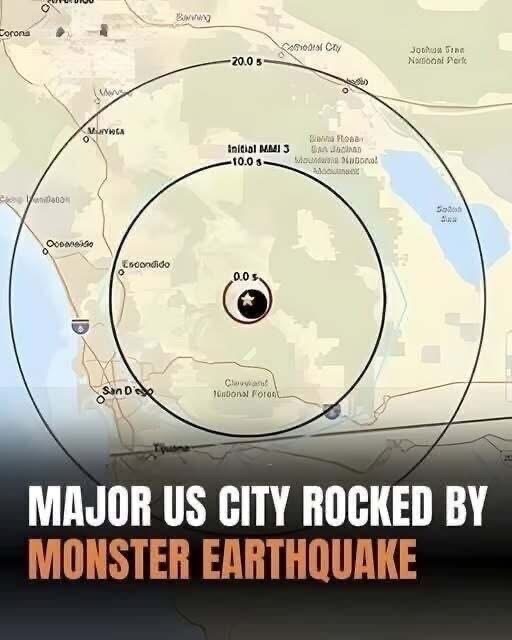
Late Monday night, a moderate earthquake measuring 5.2 magnitude struck near the mountain town of Julian in San Diego County, sending noticeable tremors across a large portion of Southern California. The earthquake occurred shortly after 11 p.m., surprising many residents who were preparing for bed or already asleep.
Although the shaking lasted only a short time, it was felt across a wide region. Reports quickly emerged from communities stretching from San Diego to Los Angeles. Residents described experiencing a sudden jolt followed by a rolling motion. Windows rattled, lights swayed, and small objects shifted inside homes and apartments.
For many people, the sensation was immediately recognizable as an earthquake, prompting discussions both in neighborhoods and online.
Tremors Felt Across a Wide Area
Southern California is home to millions of people, and even moderate earthquakes can be felt across large distances. In this case, residents dozens of miles from the epicenter reported feeling the shaking.
The widespread impact was partly due to the quake’s relatively shallow depth. According to the United States Geological Survey, the earthquake occurred about eight miles beneath the surface. Shallow earthquakes often feel stronger because their energy travels more directly to the surface.
No Major Damage or Injuries Reported
Following the earthquake, local authorities carried out inspections to check for possible damage. Early assessments indicated no major structural damage and no serious injuries.
Emergency teams evaluated important infrastructure such as roads, bridges, power lines, and water systems. These checks are standard procedure after earthquakes and help ensure that public services remain safe and operational.
Residents were advised to report any visible damage, including cracks in buildings or fallen utility lines. By the following morning, officials confirmed that normal activities had resumed across the region.
Early Warning Alerts Reached Residents
Many people reported receiving smartphone alerts from California’s ShakeAlert early warning system seconds before the shaking began.
ShakeAlert works by detecting the first seismic waves generated by an earthquake. These waves travel faster than the stronger shaking waves. When the system detects them, alerts are sent to areas expected to experience shaking shortly afterward.
Although the warning time is usually only a few seconds, it can give people enough time to move away from windows, take cover, or warn others nearby.
Community Discussion About Preparedness
The earthquake sparked renewed discussions about earthquake preparedness throughout Southern California. Some residents used the event as an opportunity to review emergency plans and check their supplies.
Emergency management agencies reminded the public about basic safety practices, including securing heavy furniture, identifying safe places to take cover indoors, and keeping emergency kits stocked with essential items.
Monitoring for Aftershocks
After the initial earthquake, seismologists continued monitoring the region for aftershocks, which are smaller earthquakes that often follow a larger one. Aftershocks can occur hours, days, or even weeks later.
While most aftershocks are minor, officials advised residents to remain cautious, especially when entering older buildings that might have been affected by the initial shaking.
California’s Seismic Reality
California lies along the Pacific Ring of Fire, one of the most seismically active regions in the world. The state is crossed by numerous fault systems, including the well-known San Andreas Fault.
Although many earthquakes in the state are small and go unnoticed, moderate events like the Julian earthquake provide valuable information for scientists studying how stress builds and releases along fault lines.
A Reminder to Stay Prepared
While the earthquake caused no significant damage, it served as an important reminder of the region’s seismic activity. Experts emphasize that preparedness—not fear—is the key to reducing risks.
Having emergency supplies, securing heavy objects in homes, and knowing safety procedures can make a significant difference during stronger earthquakes.
Events like this highlight how quickly the ground can move—and why awareness and preparation remain essential for communities across Southern California.