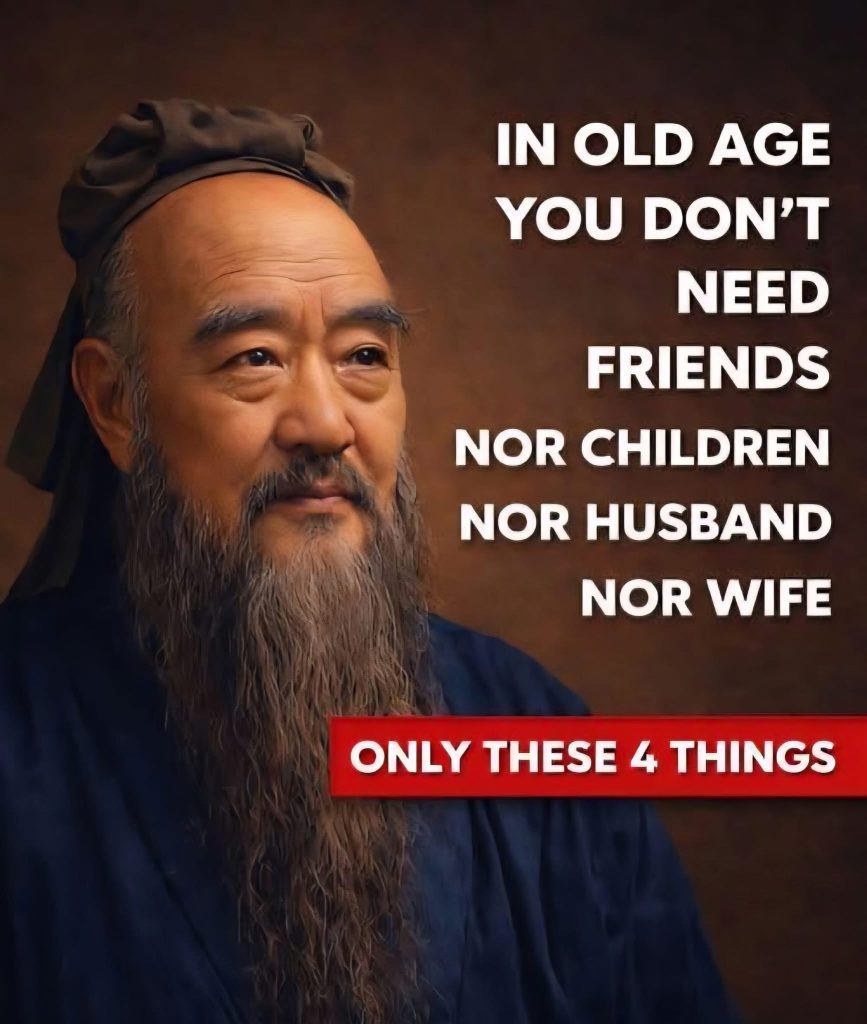
Aging is often viewed with fear in modern society. Youth is celebrated, while growing older is sometimes seen as decline. However, thousands of years ago, the Chinese philosopher Confucius offered a very different perspective.
He saw life not as a race, but as a continuous process of self-improvement. According to him, the later years of life are not a period of loss, but a time to enjoy the rewards of a life built on discipline, integrity, and meaningful relationships.
Here are four key principles from Confucian philosophy that can help guide a fulfilling life in your golden years.
1. Personal Dignity: The Foundation of Peace
Confucius believed that true dignity comes from within—not from status, wealth, or physical strength. In younger years, people often define themselves by achievements. But in later life, those external markers fade.
A peaceful old age depends on self-respect and strong values. It means maintaining discipline, honesty, and integrity even when no one is watching. If a person has lived truthfully and upheld their principles, they will find comfort within themselves.
Dignity, in this sense, becomes a source of stability—something that cannot be taken away.
2. Your Relationship With Time: Living in the Present
One of the biggest struggles in old age is the relationship with time. Many people either dwell on the past or worry about the future.
Confucius encouraged focusing on the present moment—not in a careless way, but with awareness and purpose. Each stage of life has its own value, and resisting change only creates dissatisfaction.
Learning to appreciate daily routines, simple moments, and the current phase of life allows a person to experience peace. Instead of seeing time as something that takes away, it becomes something that unfolds naturally.
3. Human Relationships: The Real Wealth
In modern life, people often prepare for retirement financially, but overlook something more important—relationships.
Confucian philosophy emphasizes that humans are social beings. Family, friendships, and community are the true foundation of happiness, especially in later years.
To be surrounded by care and support in old age, one must invest in others throughout life. This includes being present, building genuine connections, and contributing to the lives of others.
Real wealth is not measured in money, but in the number of meaningful relationships a person has built.
4. Life’s Meaning: Leaving a Legacy
Confucius taught that life should have a purpose beyond personal gain. In old age, this purpose shifts toward guiding others.
Rather than feeling that life is “over,” he believed this stage is when a person becomes a source of wisdom. Mentorship, storytelling, and setting an example for younger generations become essential roles.
A meaningful life is one that leaves behind values, lessons, and positive influence—not just memories.
Conclusion
Living well in your later years is not just about health or luck—it is about how you have lived your life.
Confucius offers a powerful framework:
- Build inner dignity
- Embrace the present
- Invest in relationships
- Create a lasting purpose
By following these principles, aging becomes not a decline, but a stage of clarity, peace, and fulfillment.
The message is simple: it is never too early—or too late—to start living wisely.