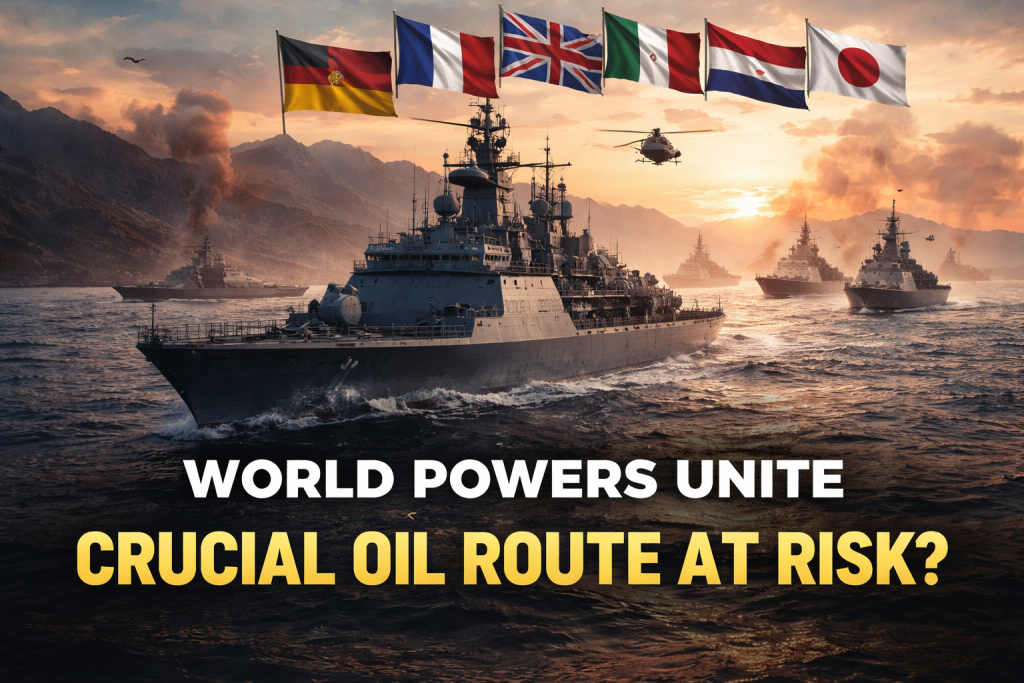
In a decisive move that underscores growing concerns over global energy security, a coalition of major powers—including France, Germany, the United Kingdom, Italy, the Netherlands, and Japan—is signaling a unified front to safeguard one of the world’s most critical maritime chokepoints: the Strait of Hormuz.
This narrow passage, located between the Persian Gulf and the Gulf of Oman, carries approximately 20% of the world’s oil supply each day. Its strategic importance cannot be overstated. Any disruption in this corridor has immediate ripple effects across global markets, impacting everything from fuel prices to supply chains and economic stability.
Rising Concerns Over Security
Recent months have seen increased tensions in the region, with reports of threats to commercial shipping and heightened geopolitical friction. While no large-scale disruption has occurred, the risk of escalation has pushed global powers to act preemptively.
Officials from participating nations have emphasized that the goal is not confrontation, but deterrence. By increasing naval presence and enhancing coordination, these countries aim to send a clear message: the free flow of commerce through international waters must be protected.
Security analysts warn that even a temporary blockage or attack in the Strait could trigger a sharp spike in oil prices worldwide. Given the already fragile state of global supply chains, such a scenario could have far-reaching consequences for both developed and developing economies.
A Coordinated Naval Response
The joint initiative is expected to include coordinated naval patrols, intelligence sharing, and surveillance operations. Warships and monitoring systems will work together to track potential threats and ensure rapid response capabilities.
This type of cooperation is not entirely new, but the scale and unity of the current effort mark a significant development. The involvement of multiple European nations alongside Japan highlights how the issue has evolved from a regional concern into a truly global priority.
Military experts suggest that a visible and well-coordinated presence in the area can act as a powerful deterrent against hostile actions. The objective is to reduce the likelihood of incidents before they occur, rather than reacting after the fact.
Economic Stakes Are High
The global economy is deeply intertwined with energy flows through the Strait of Hormuz. Oil from major producers in the Gulf region passes through this route to reach markets in Asia, Europe, and beyond.
Any disruption—whether caused by conflict, sabotage, or political instability—could lead to immediate shortages and price volatility. For countries heavily dependent on imported energy, the stakes are especially high.
Japan, for instance, relies significantly on oil shipments that pass through this corridor. Similarly, European economies would feel the impact of any supply shock, making their involvement in the security initiative both strategic and necessary.
Diplomacy Alongside Defense
While naval deployments are increasing, diplomatic efforts remain a crucial part of the strategy. Governments involved in the initiative are actively engaging in dialogue to reduce tensions and prevent misunderstandings that could escalate into conflict.
Experts emphasize that maintaining open communication channels is essential in such a sensitive region. Miscalculations or misinterpretations of military movements could quickly spiral into larger confrontations.
By combining military preparedness with diplomatic outreach, the coalition aims to strike a balance between strength and stability.
A Global Issue, Not a Regional One
The coordinated response reflects a broader shift in how global security challenges are addressed. The Strait of Hormuz is not just a regional concern—it is a lifeline for the global economy.
The participation of countries from different continents demonstrates a shared understanding: ensuring the safety of key trade routes is a collective responsibility.
Looking Ahead
As tensions continue to simmer, the coming months will be critical in determining whether this unified approach can maintain stability in the region. For now, the message from global powers is clear—protecting the flow of energy and trade through the Strait of Hormuz is non-negotiable.
In an increasingly interconnected world, the security of a single waterway can influence the fortunes of nations across the globe. And as this coalition steps forward, it signals a new phase of international cooperation aimed at safeguarding one of the planet’s most vital arteries.