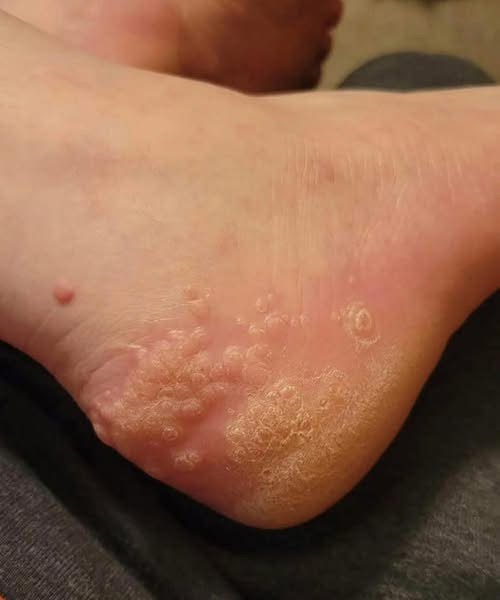
Have you ever slipped on a pair of second-hand shoes and later noticed a small yellowish bump appearing on your toe? It can look strange and feel uncomfortable, but most of the time it’s not dangerous. What you’re likely seeing is a corn or callus—a hardened area of skin your body creates to protect itself from constant rubbing or pressure.
⸻
Why Does a Yellow Bump Appear?
Shoes that previously belonged to someone else often don’t match your foot shape. Over time, footwear molds to the original owner’s toes, arches, and walking pattern. When a new person wears them, this mismatch can create problem areas.
Common triggers include:
• Friction: Repeated rubbing from tight or stiff spots inside the shoe
• Pressure: Shoes that squeeze or press on certain toes, especially the big or little toe
To defend itself, the skin thickens. This buildup of dead skin (keratin) forms a firm, yellowish area. Hard corns often appear on the tops or sides of toes and may feel tender—sometimes described as walking on a tiny pebble.
⸻
Other Possible (but Less Common) Causes
• Blisters: Strong friction can cause fluid-filled blisters, which may turn yellow if infected
• Fungal infections: Second-hand shoes can carry fungi, leading to athlete’s foot or nail changes. These usually cause itching, redness, peeling skin, or yellow nails rather than a solid bump
⸻
Why Used Shoes Increase the Risk
While new shoes can also cause discomfort, pre-owned footwear comes with extra issues:
• They’re already shaped to someone else’s feet
• Uneven wear creates pressure points in the wrong places
• Sweat, bacteria, or fungi may still be present if shoes weren’t properly cleaned
(Most images associated with this issue show yellow corns or calluses caused by shoe friction.)
⸻
How to Treat the Problem
In many cases, simple care at home is enough:
• Switch shoes: Stop wearing the pair causing irritation. Choose shoes with enough toe space and cushioning
• Soak and smooth: Soak feet in warm, soapy water for 10–20 minutes, then gently use a pumice stone. Never cut the skin
• Protect the area: Use corn pads, gel toe covers, or moleskin to reduce pressure
• Moisturize: Creams with urea help soften thickened skin
• OTC options: Salicylic acid treatments can gradually reduce corns
If the area becomes very painful, red, swollen, oozes fluid, or doesn’t improve within a couple of weeks, it’s best to consult a podiatrist. They can safely treat it and rule out underlying issues like bone alignment problems.
⸻
How to Avoid This in the Future
• Thoroughly clean and disinfect second-hand shoes
• Use antifungal sprays before wearing them
• Always wear socks
• Break shoes in gradually
• Choose breathable materials and the correct size
That small yellow bump is your skin’s warning sign that something isn’t fitting right. Fixing the footwear usually resolves the issue quickly—and if it doesn’t, professional care can help keep your feet healthy and pain-free.