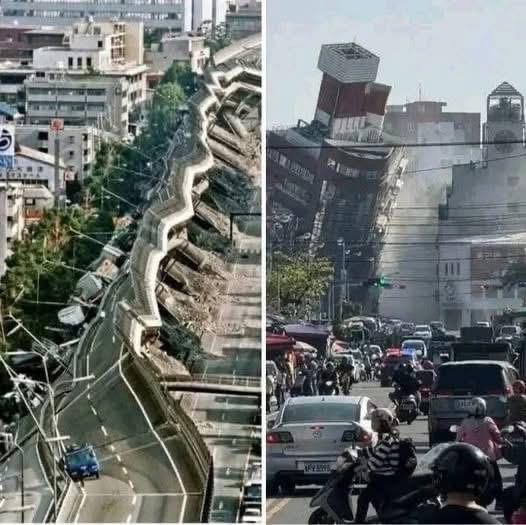
A massive 7.7-magnitude earthquake struck central Myanmar (formerly known as Burma) on March 28, 2025, unleashing widespread destruction and fear across Southeast Asia. The powerful tremor, among the strongest recorded in the region in over a century, was felt hundreds of kilometers away — including in Bangkok, Thailand — forcing mass evacuations and raising concerns over continued seismic activity.
According to the U.S. Geological Survey (USGS), the earthquake’s epicenter was located near Mandalay, Myanmar’s second-largest city. The quake occurred at a shallow depth of approximately 10 kilometers, a factor that significantly intensified the shaking and damage across a broad area.
Panic Across Cities and Rapid Disruptions
The earthquake struck suddenly around midday, sending residents in Mandalay, Sagaing, and surrounding regions rushing out of homes, offices, and public buildings. In Thailand’s capital, Bangkok, tremors were strong enough to sway high-rise buildings, prompting thousands to evacuate via emergency staircases and gather in open spaces.
Transportation networks were disrupted, schools were temporarily closed, and emergency services faced immediate challenges as they responded to multiple incidents across affected areas.
Severe Damage and Rising Casualties
Myanmar bore the heaviest impact. Entire neighborhoods near the epicenter were destroyed, with homes, hospitals, schools, bridges, and religious landmarks reduced to rubble. The country’s already fragile infrastructure suffered extensive damage, further complicating rescue and relief efforts.
Casualty numbers continue to change as search-and-rescue operations progress. Early reports indicate thousands of deaths and injuries, with many people still unaccounted for. Experts warn that the final toll could be extremely high due to the quake’s strength and its impact on densely populated areas.
Thailand Also Hit Hard
Despite being far from the epicenter, Thailand experienced significant consequences. In Bangkok, a high-rise building under construction collapsed following intense shaking, resulting in dozens of confirmed fatalities and injuries. Authorities believe many workers were inside the structure at the time, triggering an urgent rescue operation.
Seismologists noted that Bangkok’s soft, low-lying soil may have amplified the seismic waves, causing unexpectedly severe shaking even at a great distance from the earthquake’s source.
Aftershocks and Emergency Declarations
Several strong aftershocks followed, some exceeding magnitude 6.0, keeping residents on edge and prompting officials to issue warnings about further risks. States of emergency were declared in affected regions of both Myanmar and Thailand.
In a rare move, Myanmar opened its borders to international rescue and humanitarian teams to assist with the overwhelming response effort.
Global Response and Long-Term Concerns
The disaster has drawn global attention, with governments and humanitarian organizations mobilizing aid, including medical supplies, emergency shelters, and technical support.
Beyond the immediate tragedy, the earthquake has reignited discussions about construction standards, urban planning, and disaster preparedness across Southeast Asia — a region where major earthquakes are infrequent but can have devastating consequences when they occur.