What was supposed to be a routine Tuesday night drive became one of the deadliest road disasters Brazil has witnessed in recent months.
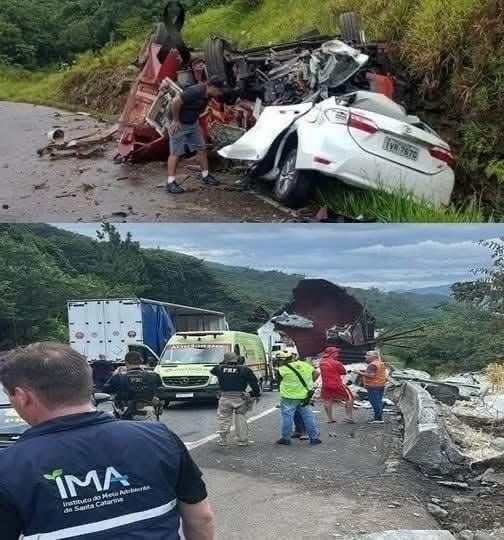
Late on the 13th, a devastating head-on crash between a passenger van and a truck turned a section of the BR-251 highway near Grão Mogol, in northern Minas Gerais, into a scene of chaos and heartbreak. When emergency responders reached the site, nine lives had already been lost. Twelve more people were injured, several fighting for survival.
The van was carrying workers heading back to Ceará after completing a period of labor away from home. The journey represented relief, rest, and reunion with family. Instead, it became the end of the road.
What Investigators Found
According to preliminary findings released by the Minas Gerais Civil Police (PCMG), the collision occurred when the truck veered into the opposite lane, directly into the van’s path.
“That was the decisive element,” forensic specialist Hugo Leonardo stated.
Investigators spent hours analyzing the crash site, examining:
- Skid and tire marks
- Drag patterns across the road
- Deep cuts torn into the asphalt
The evidence pointed to a sudden loss of control, no chance for evasive action, and a collision so violent that both vehicles were left mangled beyond recognition.
A Night of Rescue and Silence
Emergency crews worked through the darkness under floodlights, cutting through wreckage to reach survivors trapped inside. Firefighters, paramedics, highway officers, and forensic teams coordinated carefully, their work carried out in near silence, interrupted only by radio calls and metal being cut away.
The injured were rushed to hospitals across the region. Many suffered fractures, internal injuries, and severe trauma. Some remain in critical condition.
Hundreds of kilometers away, families slept peacefully—unaware that their loved ones would never make it home.
By morning, phone calls shattered lives.
Parents lost sons and daughters.
Children lost mothers and fathers.
Partners lost the futures they had planned together.
Images of the victims soon spread online, alongside messages filled with grief and anger:
“They were just going home.”
“They worked hard.”
“This didn’t have to happen.”
A Dangerous Highway With a Dark Reputation
Residents of Grão Mogol say this stretch of BR-251 has long been known as dangerous, especially at night when visibility is poor and heavy trucks dominate the road.
“This highway is a trap,” one local resident said. “We’ve warned authorities for years.”
Traffic was shut down for hours as investigators documented the scene and cleared debris. Long lines of vehicles stretched in both directions. Some drivers stepped out of their cars in silence, others prayed when they understood the scale of the tragedy.
Questions That Demand Answers
Authorities confirmed that a full technical report will be released in the coming days. Investigators are assessing whether speed, driver fatigue, mechanical issues, or road conditions played a role in the truck crossing lanes.
For the families of the nine victims, however, no report will bring relief.
The crash has reignited nationwide debate over:
- Road safety on major highways
- Monitoring and regulation of truck drivers
- Nighttime driving risks
- Fatigue among long-haul professionals
- The urgent need for infrastructure improvements on BR-251
Across Brazil, one painful question echoes:
How many more lives will be lost before real change happens?
For now, families are preparing funerals instead of welcoming loved ones home.
Beds remain untouched.
Messages go unanswered.
Suitcases are never opened.
A few seconds on a dark highway erased dozens of futures.
What began as a simple journey ended in twisted steel, shattered families, and a nation in mourning.
And for those left behind, Tuesday night will forever divide life into before—and after.