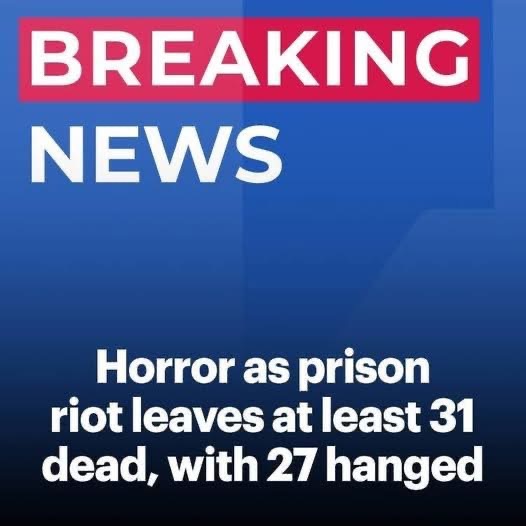
A deadly outbreak of violence inside a prison in Machala has shaken the nation of Ecuador, marking one of the most serious incidents in the country’s correctional system in recent years. Authorities confirmed that at least 31 inmates lost their lives during a large-scale disturbance, while several others were injured.
The incident, which occurred at a penitentiary in the country’s southwest, is currently under full investigation. Officials from the Servicio Nacional de Atención Integral a Personas Privadas de Libertad (SNAI) stated that the exact cause of the deaths has not yet been officially determined. However, early indications suggest that many victims may have died from suffocation, while other cases remain unclear pending forensic analysis.
How the Violence Unfolded
According to initial reports, the unrest began around 3:00 a.m., a time when most inmates were asleep. Residents living near the facility described hearing gunfire, explosions, and prolonged shouting, painting a picture of chaos both inside and outside the prison walls.
Security forces, including specialized police units, were quickly deployed to regain control. As officers entered the facility, they encountered multiple casualties. Additional victims were discovered as authorities secured different sections of the prison.
Emergency responders worked to evacuate the injured and stabilize the situation. Among those hurt were several inmates and at least one law enforcement officer.
A System Facing Ongoing Pressure
The tragedy in Machala highlights deeper, long-standing issues within Ecuador’s prison system. Over the past few years, the country has experienced a surge in prison violence, with more than 500 inmate deaths reported since 2021.
Experts point to several contributing factors:
- Severe overcrowding
- Limited staffing and resources
- The influence of organized crime groups
- Internal conflicts linked to drug trafficking networks
- Poor infrastructure and access to basic services
Recent administrative changes within the Machala facility may have also contributed to rising tensions. While intended to improve control, restructuring efforts can sometimes disrupt internal balances and trigger conflict among inmate groups.
A Changing Security Landscape
Once considered relatively stable, Ecuador has seen increasing security challenges over the past decade. The country’s strategic location has made it a key route for international drug trafficking networks, which has had a direct impact on both communities and prisons.
Cities such as Guayaquil and Esmeraldas have also reported rising concerns related to crime and violence. Analysts warn that prison unrest is often a reflection of broader criminal dynamics operating beyond prison walls.
Human Impact and Community Response
Beyond the numbers, the incident has deeply affected families and communities. Relatives gathered outside the prison seeking information about their loved ones, while advocacy groups called for transparency and humane treatment.
Mental health experts emphasize the toll such environments take on both inmates and staff. Many are calling for increased investment in rehabilitation programs, counseling, and conflict-resolution initiatives.
What Comes Next
Authorities continue to investigate the incident, reviewing surveillance footage, interviewing witnesses, and analyzing forensic evidence. The findings are expected to shape future reforms, which may include:
- Improved monitoring systems
- Increased staffing and training
- Better separation of rival groups
- Enhanced emergency response protocols
- Expanded rehabilitation and reintegration programs
Officials have acknowledged that meaningful reform will require long-term commitment and coordination across multiple sectors.
A National Wake-Up Call
The Machala prison unrest serves as a stark reminder of the challenges facing Ecuador’s correctional system. It underscores the urgent need for reforms that balance security with human rights and long-term stability.
As the country continues to confront evolving threats from organized crime and global trafficking networks, many believe that comprehensive, coordinated action will be essential—not only to prevent future tragedies, but to strengthen the nation’s overall security and justice system.